
Colour, Control, Play and Possibility – Why I Keep Coming Back to the Gel Plate
I didn’t expect gel plate monoprinting to become such a big part of my creative practice. But more than a decade after first trying it, I’m still learning from the process.
I’ve been thinking about why it has held my attention for so many years – not just as a technique, but as a way of working that keeps teaching me about colour, control, play and possibility.
You may want to grab a cuppa for this one. I have a lot to say about gel plate monoprinting, which probably isn’t surprising, given how long this process has been part of my creative life.
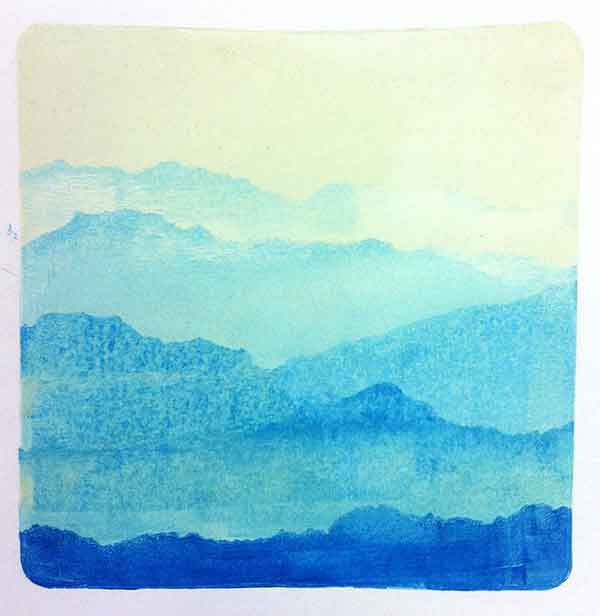
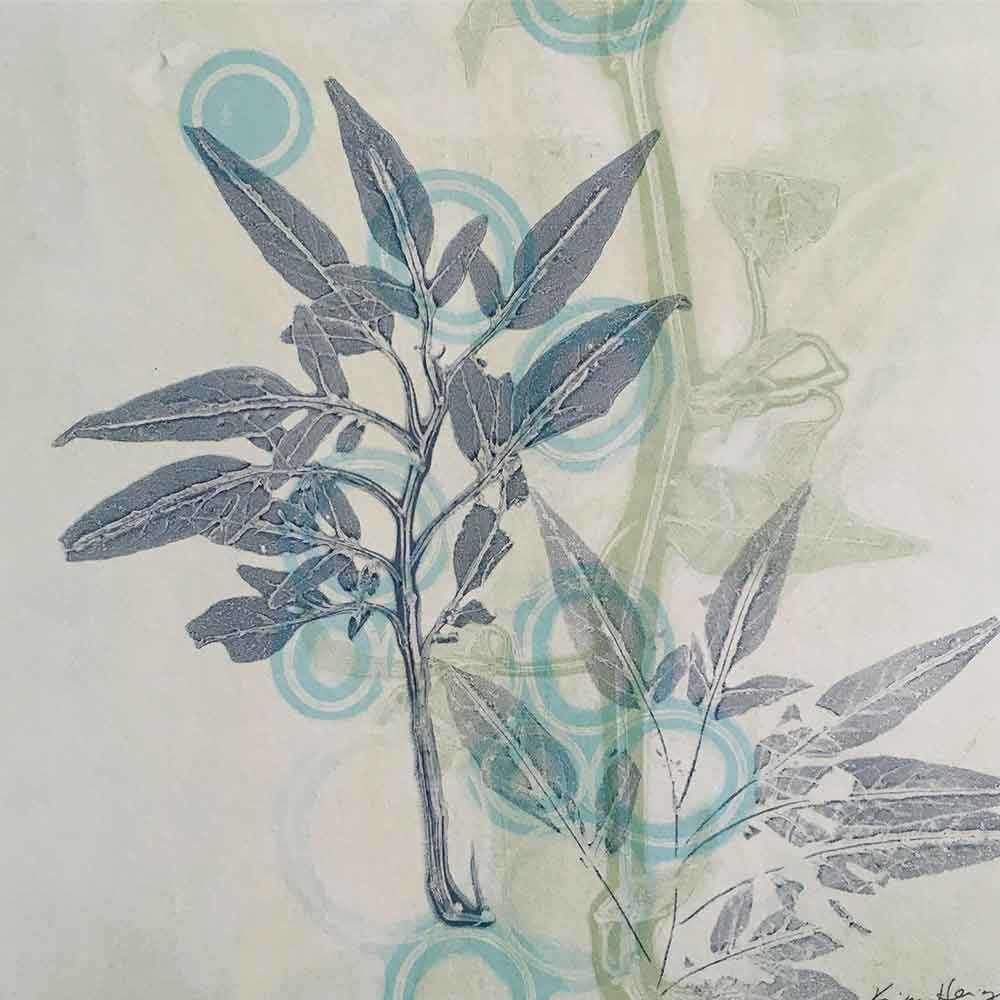
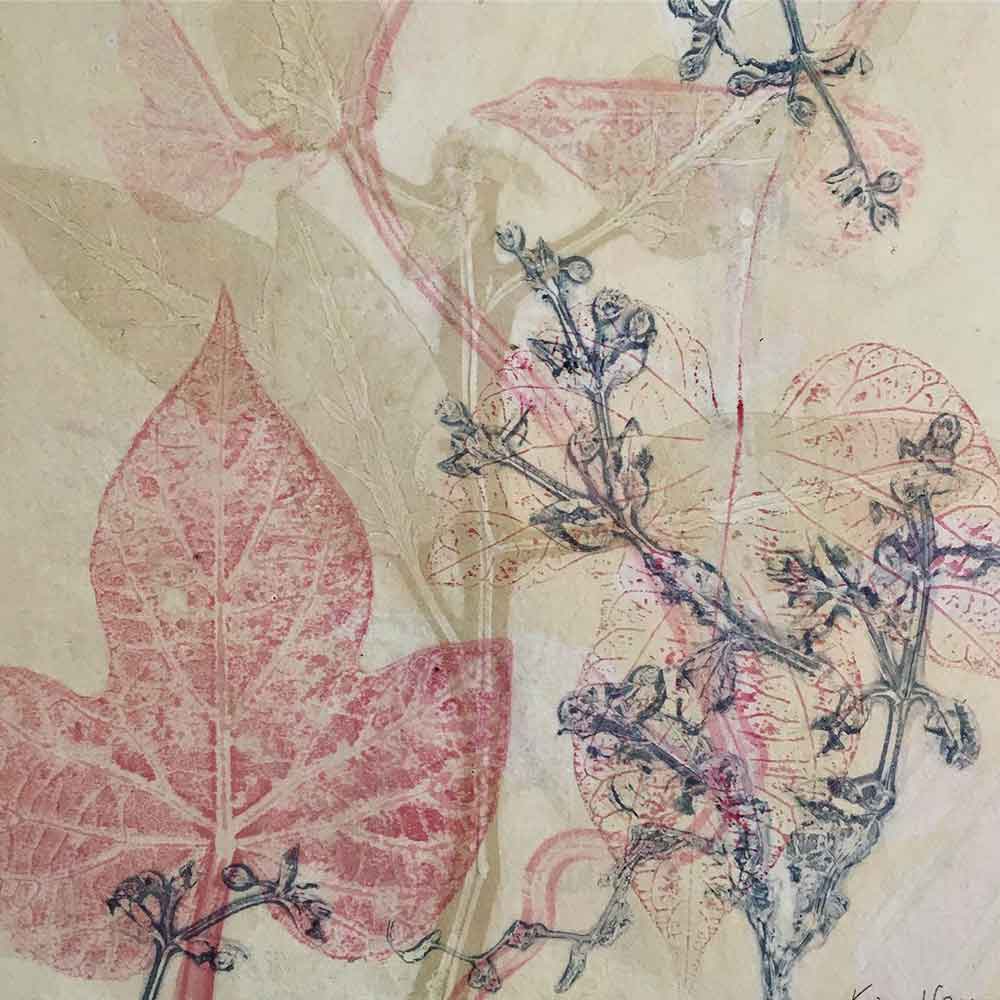
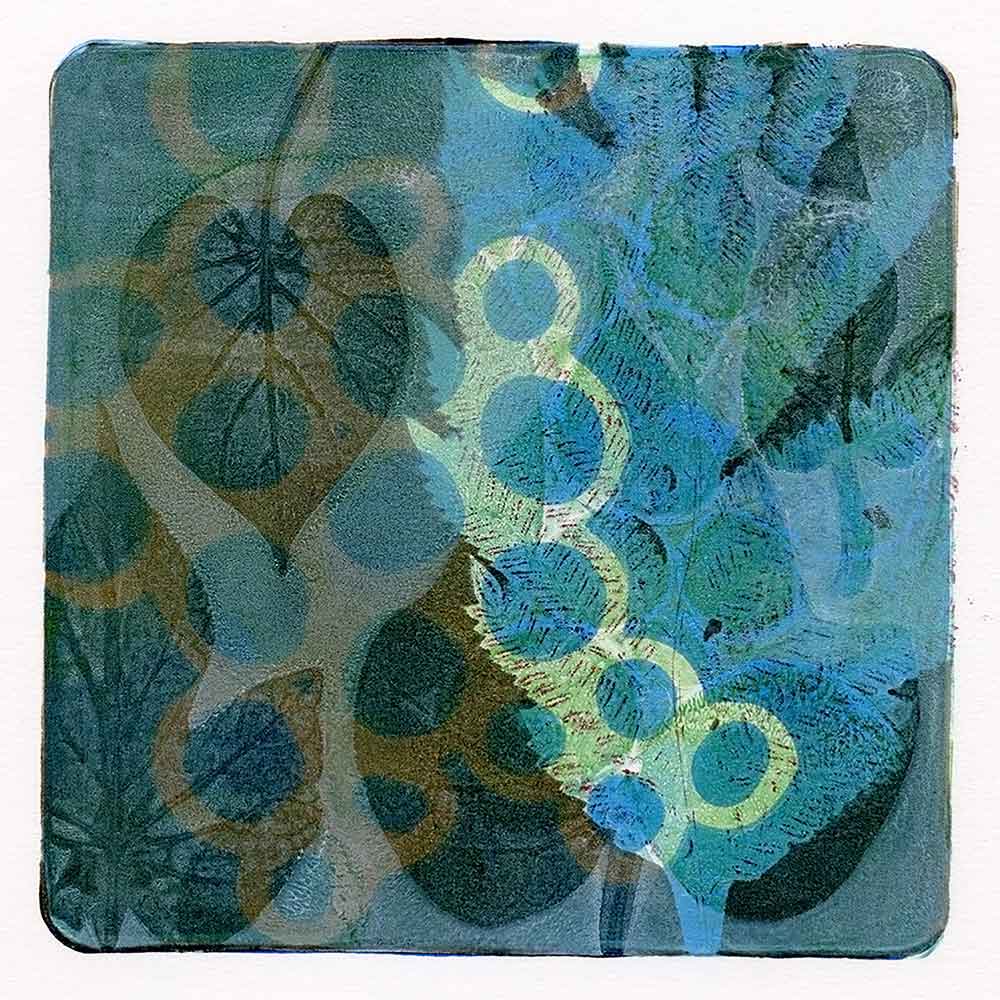
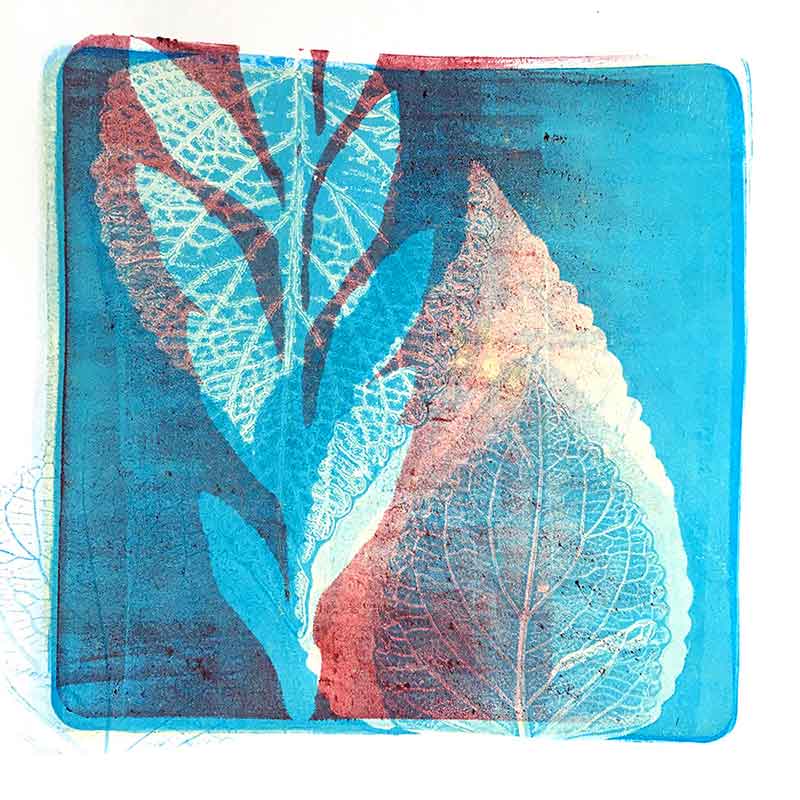
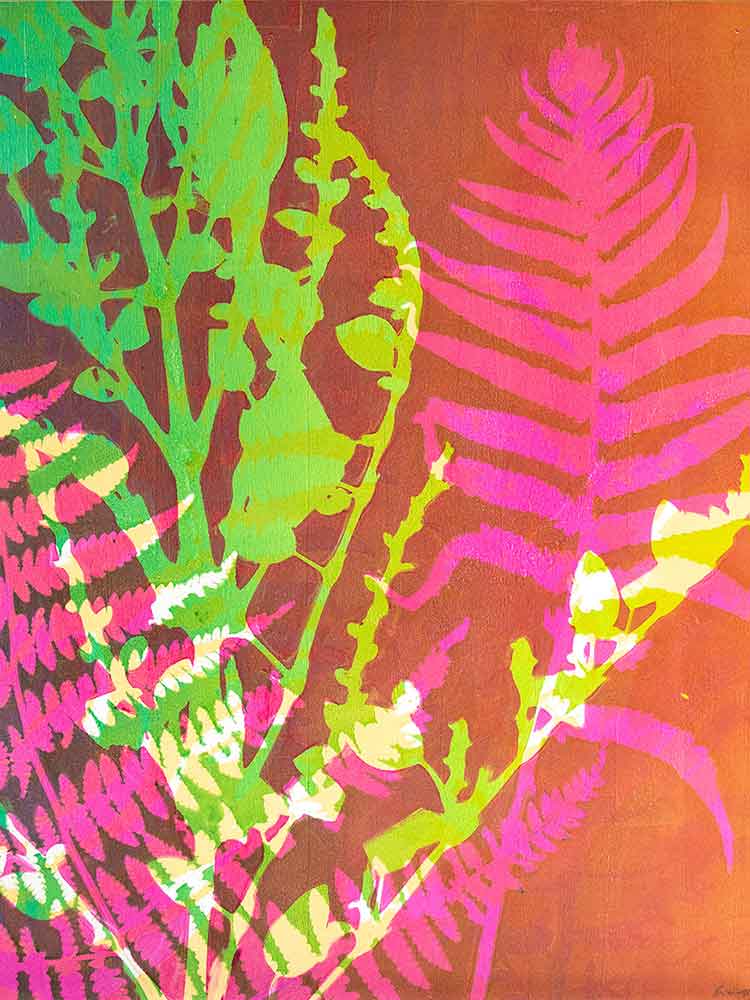
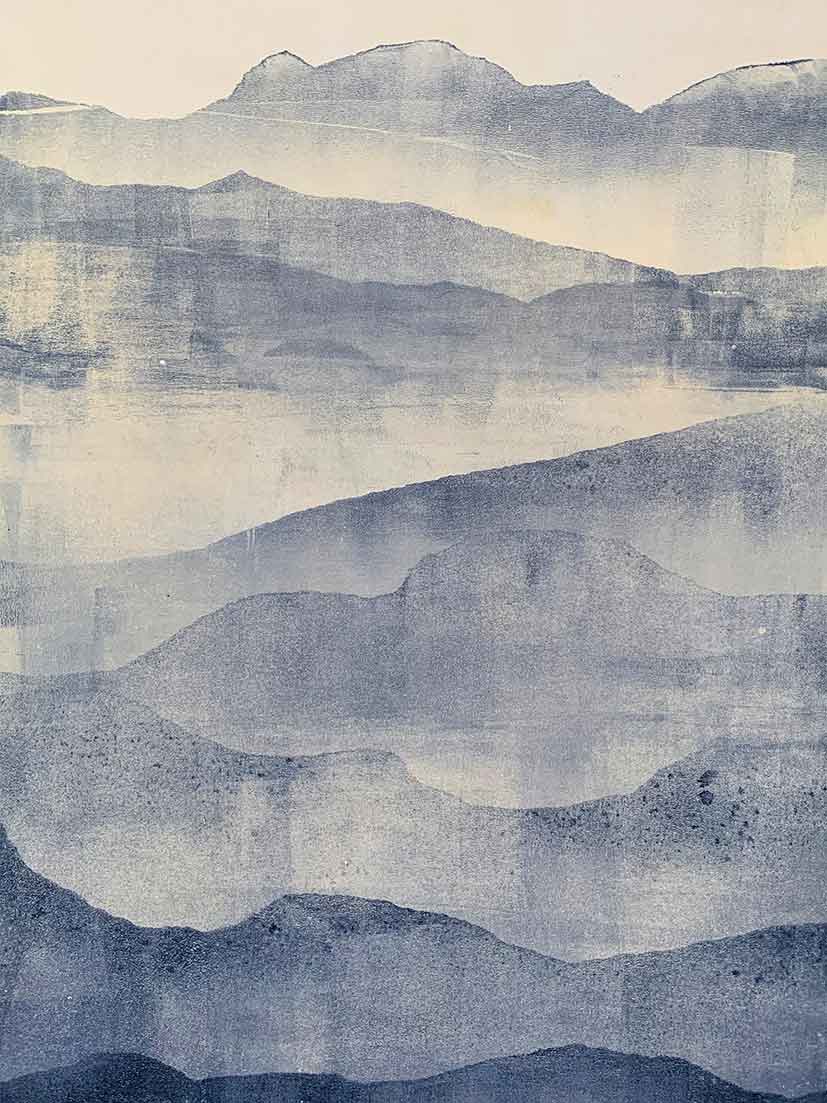
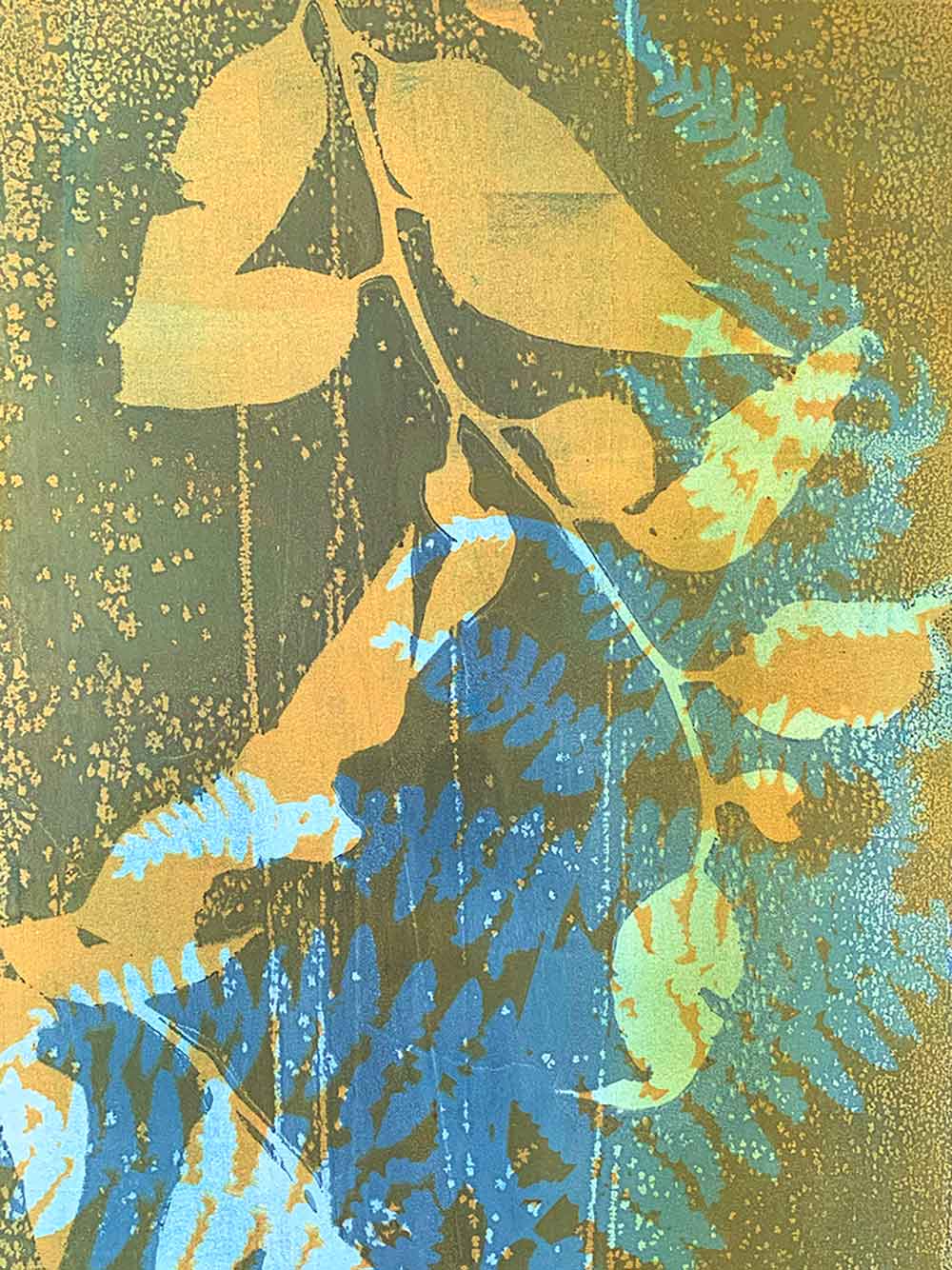
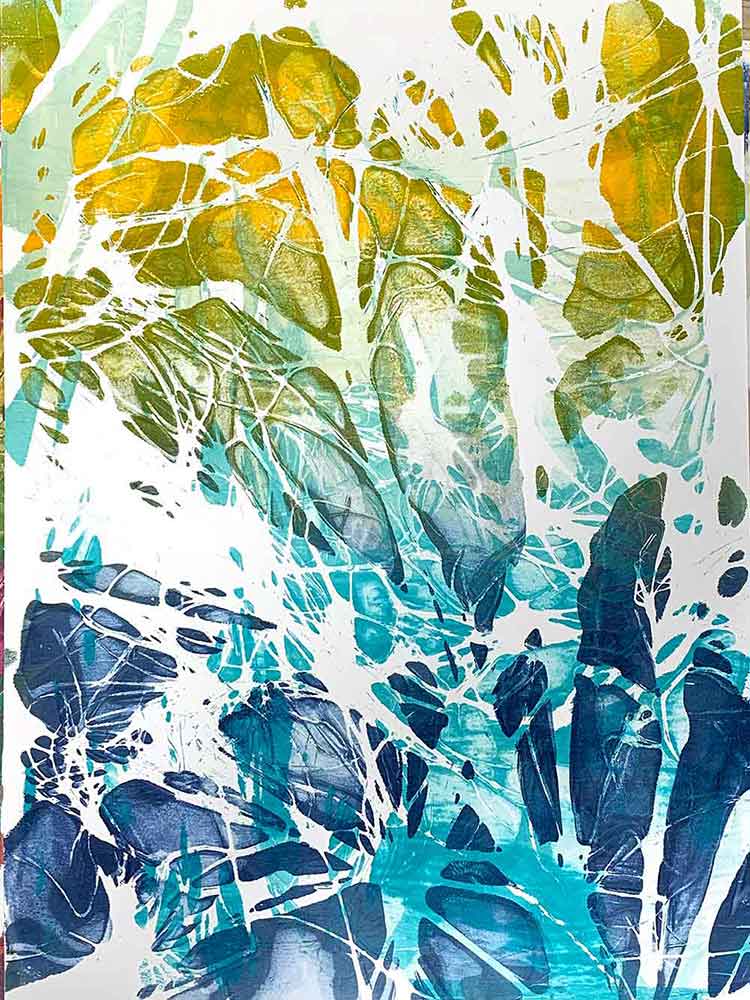
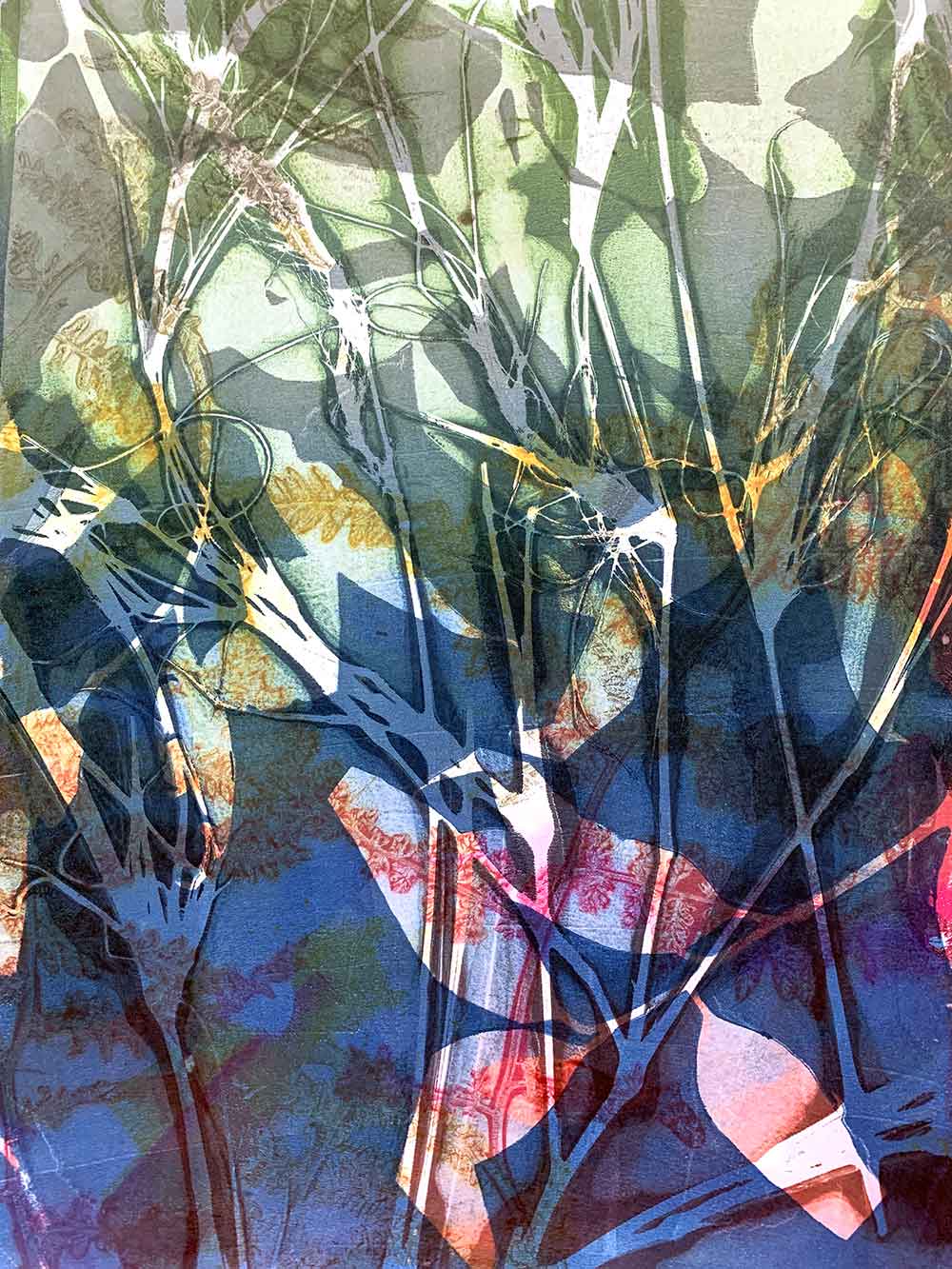
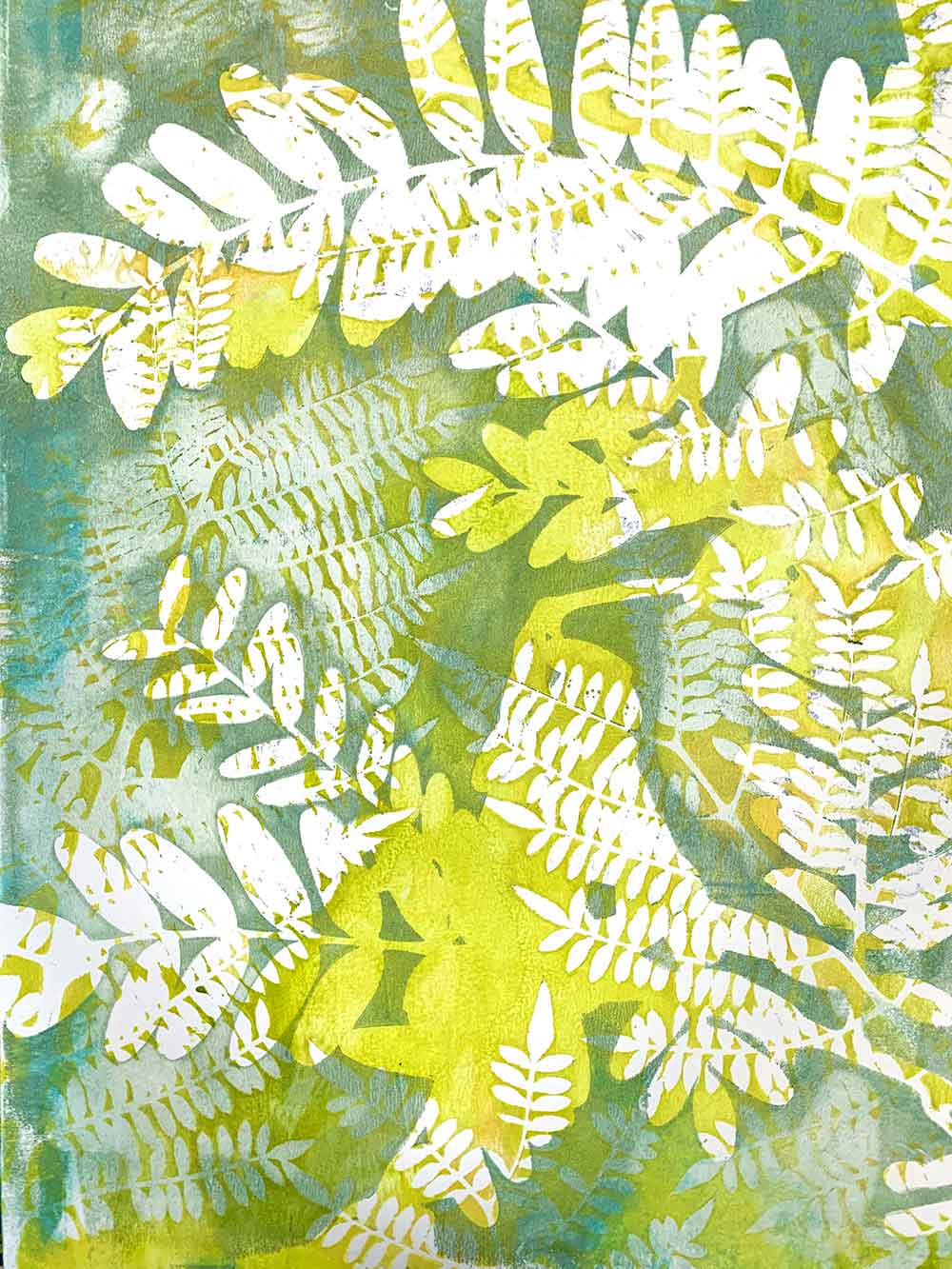
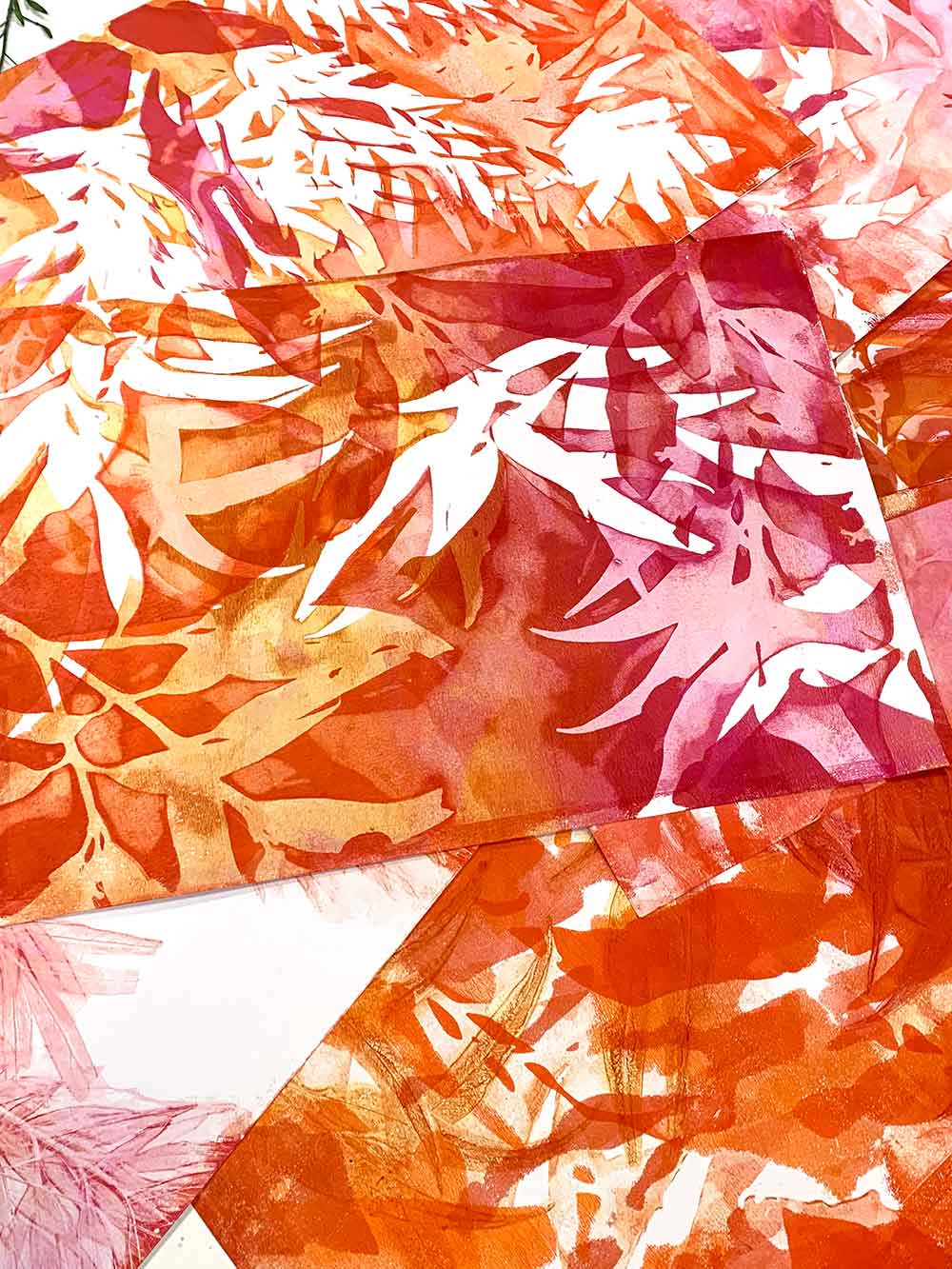
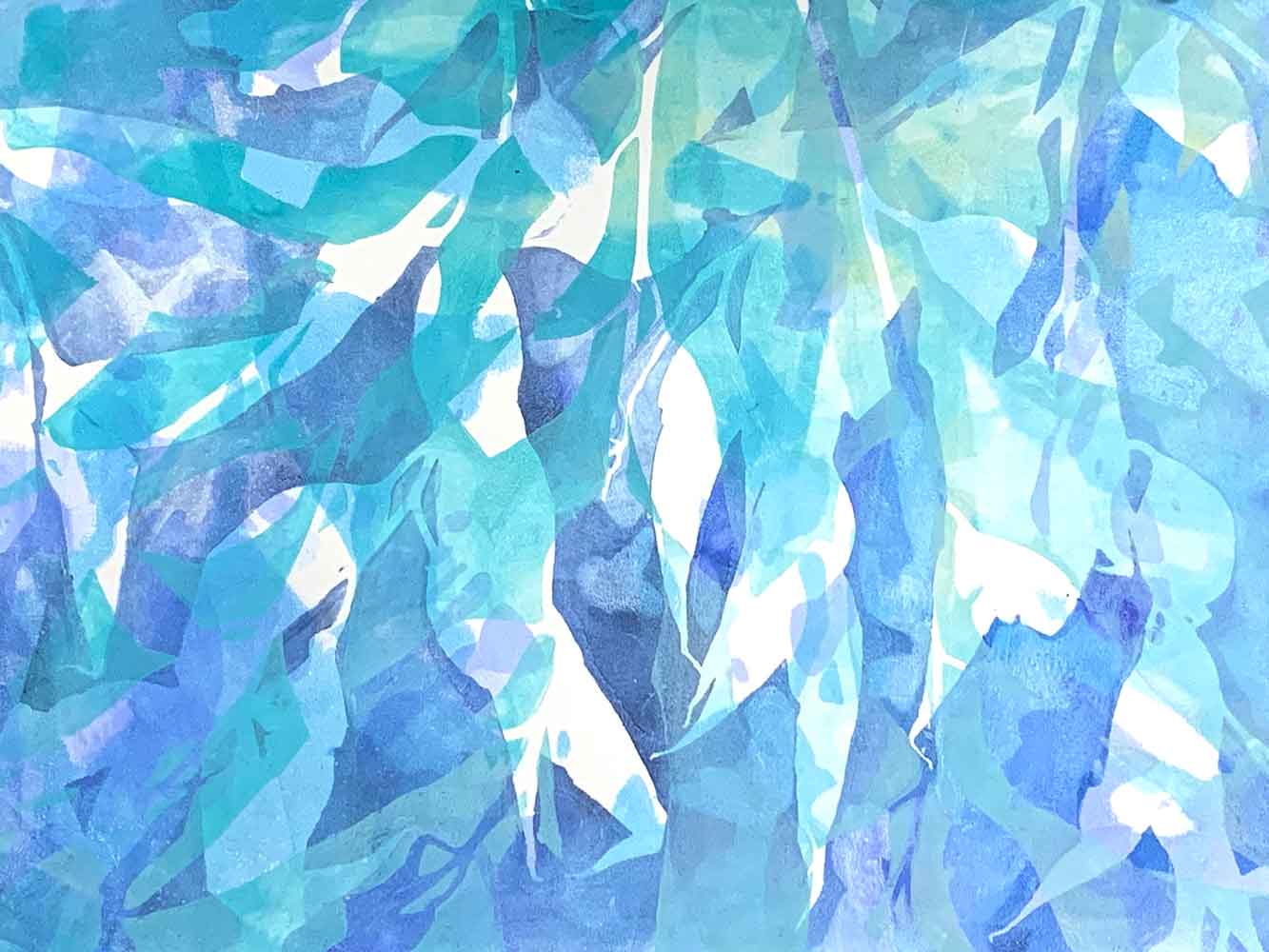
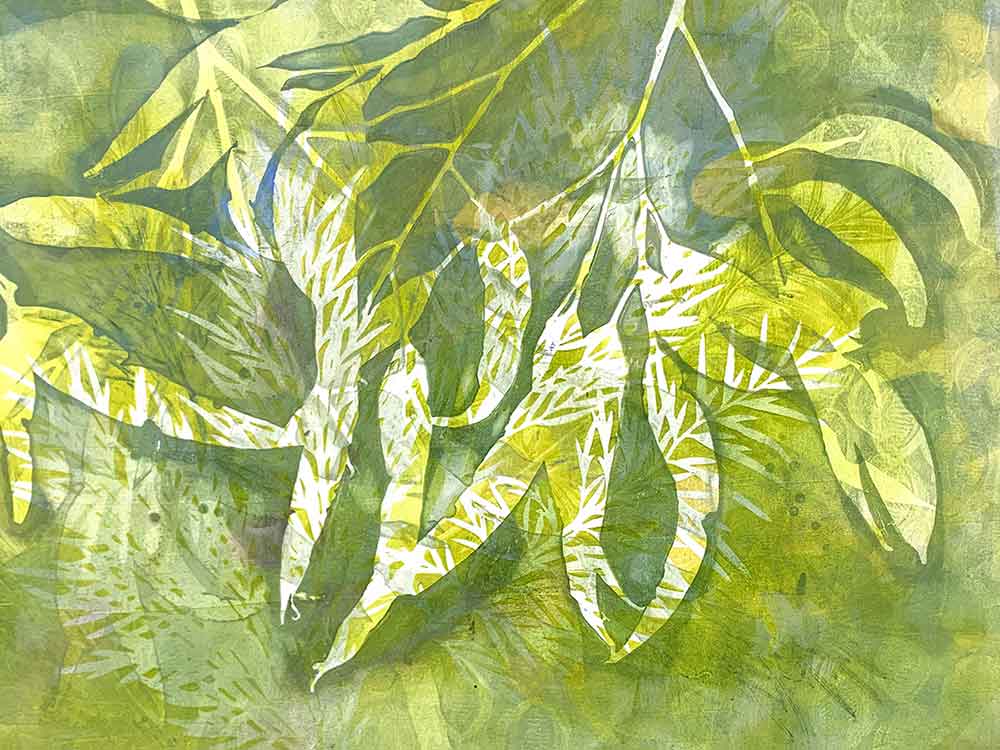
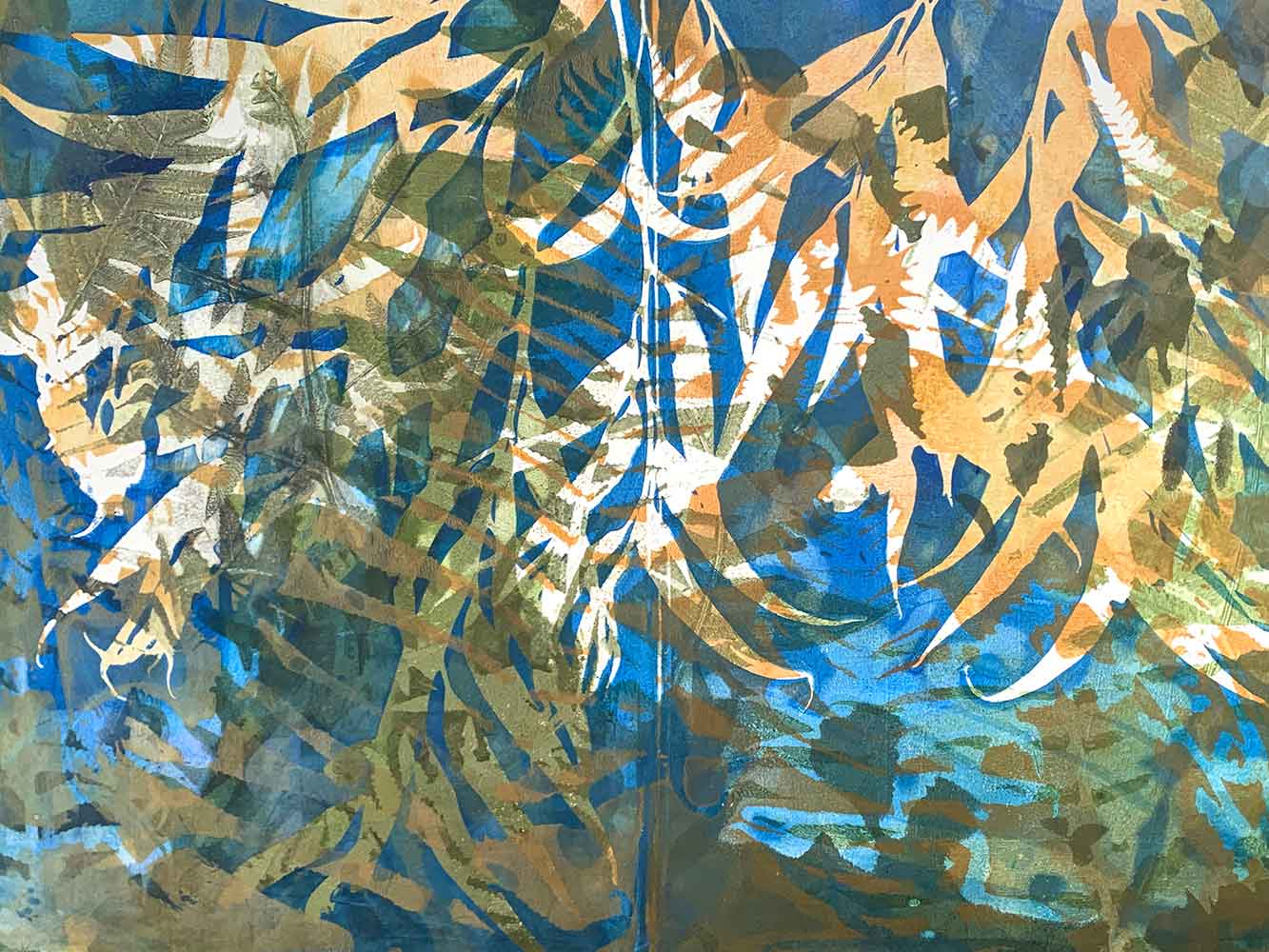
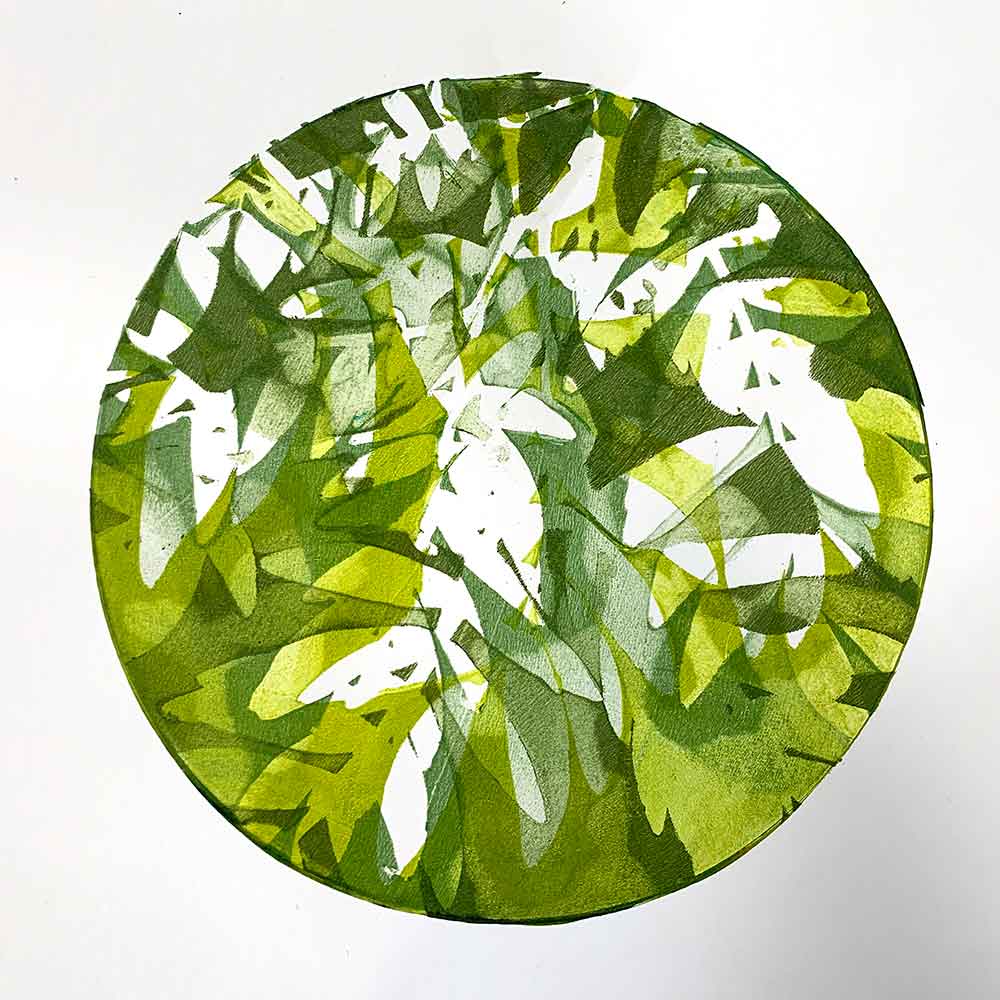
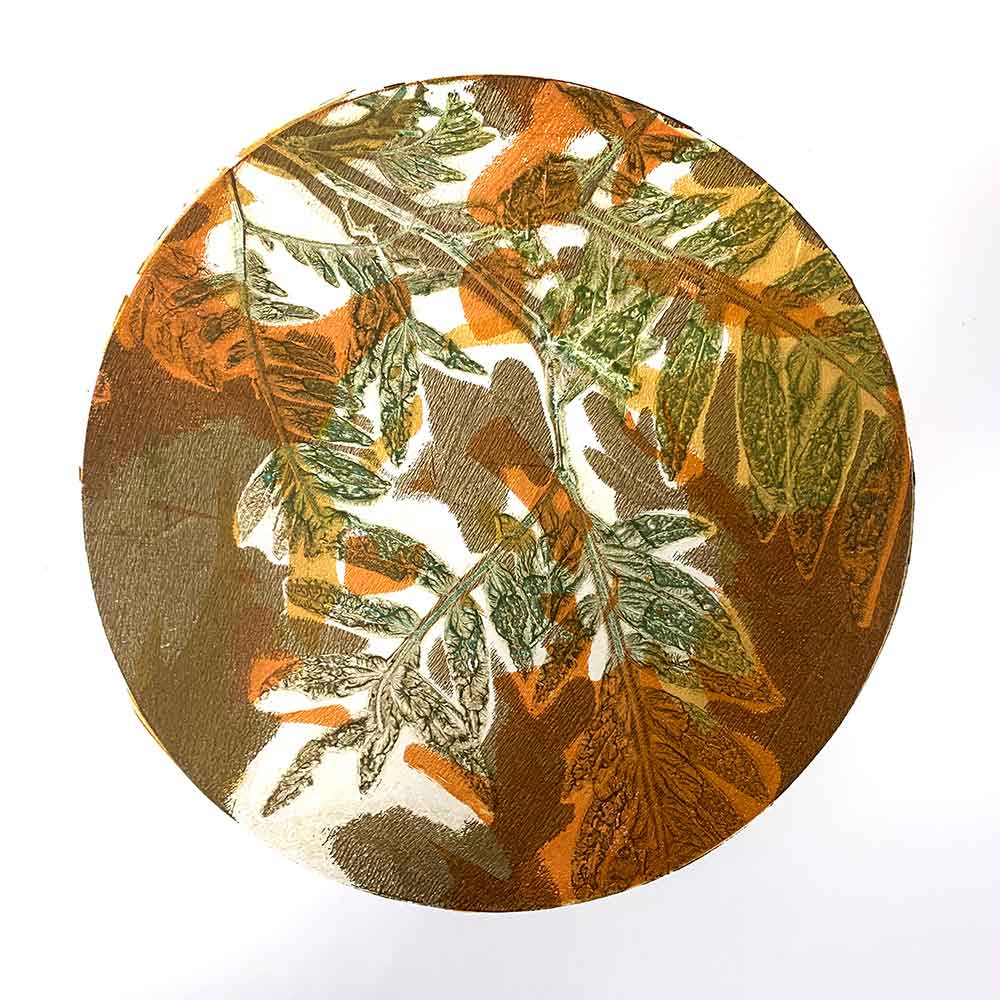
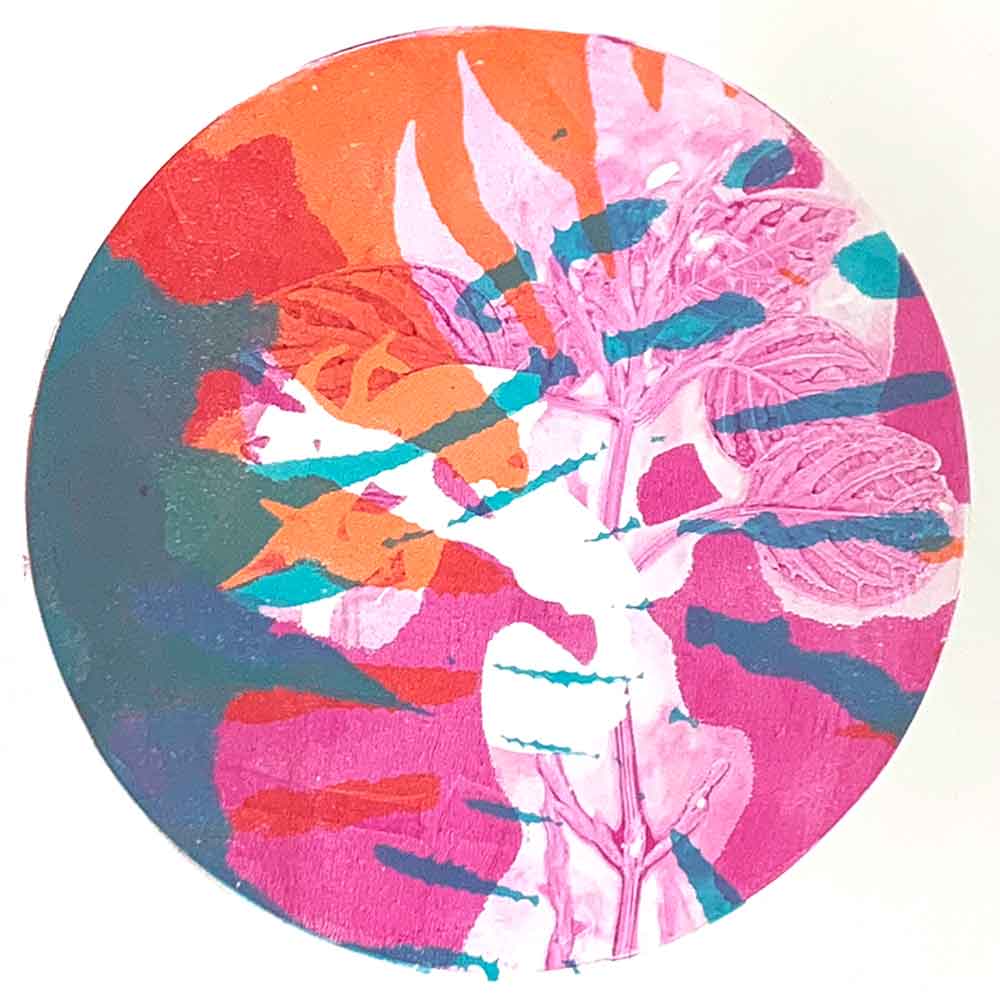
I was first introduced to gel plate monoprinting sometime around 2011/2012. I’ve scrolled through the photo archives to find images of my work from those early days. Below you’ll find a collection, in a loose order of creation. Some images are cropped, some aren’t, but you can see the change and progression of my work over the past 15-ish years.


The first plate I used was a Gelli Arts® gel plate, given to me to try by Nancy, the Australian east coast representative for Golden products. Around the same time, Sonja had introduced me to monoprinting with botanicals on glass. So thank you Nancy and Sonja – between the two of you, something important began.
It was an instant attraction.
I was in my previous studio in Maleny, working with what I had on hand – Derivan Structure acrylic paints. They are heavy-bodied acrylics and dry quickly, so I had to move fast. But even then, I found myself naturally wanting to build layers of colour on the paper and let those colours interact.
I loved the ease of rolling paint onto the plate.
I loved the squidgyness of the plate’s surface.
I loved the way the plate held the vein detail of leaves.
And I loved that I could work with paint, not ink.
Paint has a completely different viscosity and behaviour. It opened up a whole new way of working with colour, shape and layers.
From the very beginning, I was drawn to botanicals.
I don’t remember making a conscious decision about that. I was never especially attracted to cut stencils. I think the botanical shapes became my stencils. Leaves, stems, grasses, fern fronds – they all bring their own structure, line and movement to the plate. I love their organic and natural composition.
Collecting the botanicals is as much a part of the process for me as the printing itself. I’m fortunate to live where I do, with a constant supply of interesting shapes and sizes to print with. I look for vein detail, stems, silhouettes, open spaces, curves, edges and surprises.
In many ways, the plants begin the drawing for me.
My early prints were similar, but different from what I make now.

I was building colour in layers from the start, but my confidence with colour and composition has grown over time. These days I mostly use Golden OPEN acrylics because I love their slower drying time, translucency and pigment strength. I also use other acrylic paints, including Liquitex, Amsterdam and Jo Sonja, depending on what I am doing.
The process is still recognisably the same, but my understanding has deepened.
I have learnt how to work more intentionally with layers, pressure, negative space and colour. I have learnt how to leave room for the print to breathe. I have learnt that the “pop of white” on the paper can be just as important as the colour.
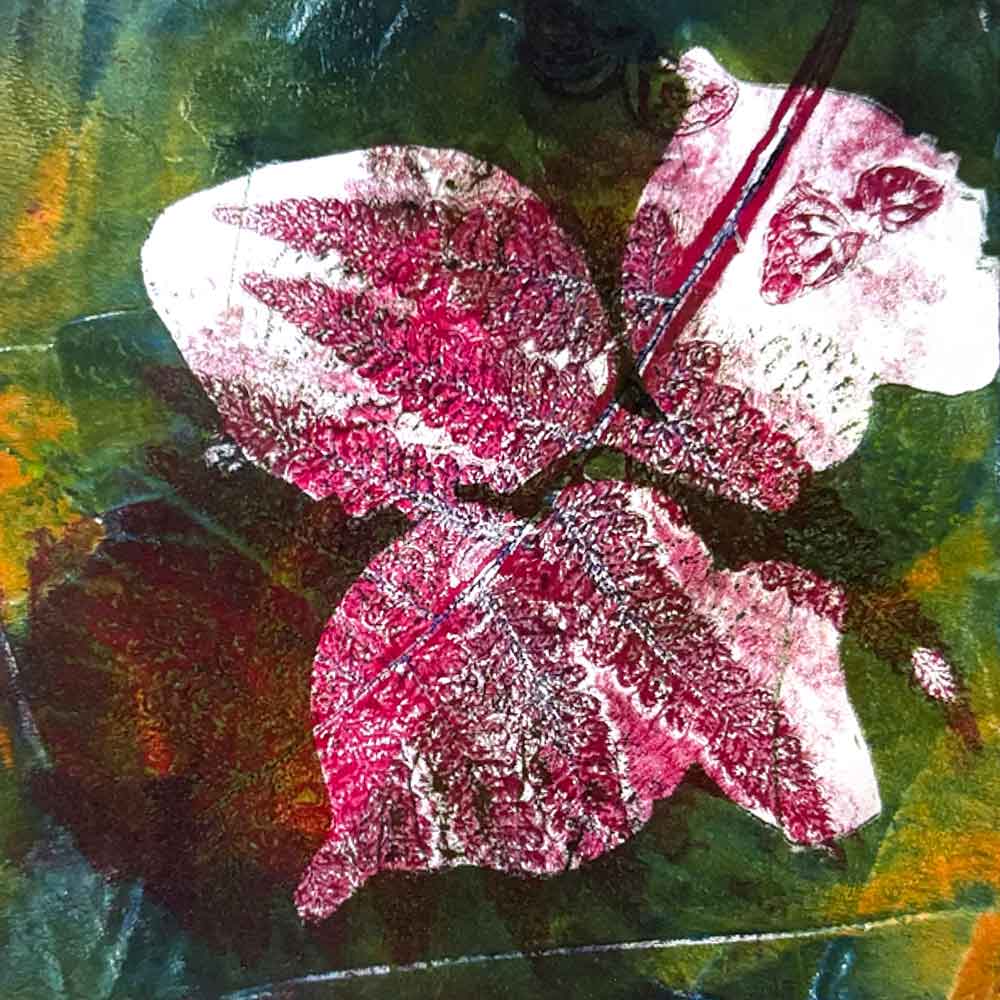
A lot of people love the plant vein ghost print – that beautiful detailed impression left behind after the botanical has been removed. I used to chase that too. These days, I’m less interested in printing the ghost impression if it means losing the white space that gives my work its lift.
Those pops of white have become one of the recognisable parts of my gel plate monoprints. They are not always there, but often they are.



If I had to describe my gel plate monoprinting style, I would say it is colourful and free. There is usually a hint of abstraction because of the way I layer colour, but the overall image is still botanical.
You know it comes from plants.
You might not know exactly which plants, or how many layers are sitting there, but you can feel the botanical presence.
One of the biggest things this process has taught me is how to release control.
I say this often in workshops: release the attachment to the outcome.
The nature of monoprinting asks that of you. When I build layers of colour on the paper, allowing the colours to interact, I never really know whether it has worked until I lift the paper from the plate.
That moment still gets me.
The ecstasy of the reveal.
Sometimes the print works. Sometimes it is awkward. Sometimes it is just plain yuck. Sometimes I don’t like it at first, then come back a few days later and see something completely different.
I see this with students all the time. They pull a print, look disappointed, and say they don’t like it. Often it’s not because the print has failed. It’s because it isn’t what they expected it to be.
But that is an unfair expectation to place on yourself, and on the print.
The nature of the process needs you to be open to possibility. To let go. To play.
And I don’t use the word play lightly.

To play is to be creative. It is a serious and necessary part of making work. As soon as I try to control the outcome too tightly, the work can start to feel contrived, or it simply doesn’t work.
Gel plate monoprinting reminds me to loosen my grip.
Don’t overthink it.
Don’t expect every print to be a masterpiece.
Print for the sheer joy of creating.
Some prints will become finished artworks. Some will become book pages, covers, collage papers, studies, fragments, gifts, experiments, or raw material for another day. Some may eventually end up in the bin. That’s okay too. They have still done their job if they gave you time to explore, play and create.
I use my prints in artist books and as finished artworks. I mount them to board. I frame them. I turn them into pages and covers. I also sell some of my printed papers in collage packs, because I am not really a collage artist myself, and I love the idea that someone else might give those papers another life.
One of the questions I hear often is: what do I do with all these prints?
My answer is usually: don’t decide too quickly.
Put them aside. Come back with fresh eyes. Turn them around. Crop into them. Look within the print, not just at the whole printed page.
Quite often, the artwork is hiding inside the larger print.
That has become an important part of my approach. A whole print does not need to be perfect to be useful or beautiful. Sometimes the resolved image is in one quiet corner. Sometimes it is a crop, a detail, a small moment of colour and shape that you didn’t see at first.
My confidence with colour has also developed through this process.
I have not been taught traditional colour theory in a formal way, but my background in graphic design has given me an intuitive relationship with colour. In my linocut printmaking, I often mix my colour palette from three primary colours, black and white. With gel plate monoprinting, I have a huge range of paint colours available to me, and that opens up a different way of working.
Both approaches have taught me different things.
Gel plate monoprinting has helped me step outside my colour comfort zone. It has taught me to watch how colours behave when they layer. It has shown me that colour choice is deeply subjective.
I see students get caught up on colour, worried they will make the wrong choice.
There is no wrong choice.
There is experimentation. There is play. There is curiosity. When you are layering colour onto paper, you need to keep an open mind about where the colour might go.
Some of my most useful discoveries have come from giving myself permission to play with no fixed outcome.
In focused play sessions, where I might give myself an hour or two to simply print, I have discovered new printing sequences. My circuit sequence came from that kind of play. So did my approach to varying pressure on the paper when picking up paint. So did my understanding of how to retain those pops of white while building tonal variation through different layers.
Those things did not come from trying to make one perfect print.
They came from printing many layers across many pieces of paper and seeing what happened.
A good exercise is to give yourself the gift of an hour, 30-40 pieces of paper and a limited selection of colours. Your objective is not to make a masterpiece. Your objective is to layer colour on paper.
That’s it.
Print. Respond. Print again.
If colour worries you, choose six paint colours before you begin. Arrange them into groups of three and work through those combinations. Don’t overthink it.
You may be surprised by how quickly you move into flow when you take away the pressure of needing each print to be “good”.
Teaching this process has helped me understand it more clearly.
I teach the way I work. I openly share my approach, my preferences, my mistakes, my sequences and my decision-making. Teaching has made me pay closer attention to the specifics of composition, layering and intention. It has helped me explain things I once did intuitively.


And it has reminded me, again and again, that people need permission.
Permission to play.
Permission to make ugly prints.
Permission to not know where something is going.
Permission to come back later.
Permission to keep only a small section of a larger print.
Permission to make work that is simply what it is.
Gel plate monoprinting sits alongside my other printmaking and bookmaking processes. Sometimes I integrate it with artist books, linocut, cyanotype, eco-printing or other mixed media processes. Other times it stands on its own.
These days, I don’t do as much gel plate monoprinting as I would like. When I do return to it, it feels like creative respite. It gives me a way to relax, refocus my mind and reconnect with making without needing a polished outcome.
That is one of the reasons I still love it.
It can be playful and immediate. It can be loose and joyful. It can also become a beautiful artform when handled with care and attention.
Some people use gel plate printing for craft projects. Others use it to create fine artworks. There is a place for both.
For me, it has become a process that holds both freedom and intention.
It asks me to pay attention, but not grip too tightly.
It asks me to make decisions, but stay open.
It asks me to trust the process.
And it keeps reminding me that the best work often appears when I give myself permission to play.
I teach gel plate monoprinting both online and in person, and many of these ideas sit at the heart of those workshops.
I’m also pleased to be sharing part of my botanical gel plate monoprinting process in Gelli Arts® Your Printmaking Journey, an online workshop program beginning on 18 October. My lesson, Botanical Impressions, shares my approach to working with botanicals, layered colour, and finding smaller resolved images within larger printed papers.
For those who have already learnt with me, parts of my lesson will feel familiar. The broader value of the Gelli Arts® program is the full line-up of 13 artists, each bringing their own style, process and way of thinking about gel plate printmaking.
At the time of writing, Gelli Arts® is offering a Super Early Bird enrolment price of US $149. The price increases to US $169 in September, then to the regular price of US $199 in October.



If the Gelli Arts® program timing doesn’t suit, you can also learn gel plate monoprinting with me through my own in-person and online workshops.
However you come to the process, my encouragement is the same.
Start where you are.
Use what you have.
Print for the joy of it.
And don’t decide too soon whether something has worked.
Some useful gel plate monoprinting tips
About the Plates
- Tips for Cleaning and Storing Your Gelatin & Gelli Plates
- How to Melt and Re-pour a Homemade Gelatin Printing Plate
- What is gelatin ‘bloom strength’ and why is it important?
- Gelatin Plate Printmaking Recipe
About printing