
Close Attention: where awe begins

Awe begins with close attention.
I set out to make work about close attention. To share the awe that can be experienced when we slow down and really look.
What I did not know was what that work would look like.
The imagery evolved as particular details kept stopping me.
A pattern. A change of perspective. The fine structure remaining after softer material had decayed. Something familiar seen from an unfamiliar angle.
I photographed plants in the forest that intrigued me and made a larger collection of work in response. From that collection, I selected the five pieces that now form Close Attention. Each subject was photographed on the private rainforest restoration property in the Sunshine Coast Hinterland that was the focus of Ghosts of Gondwana.
The subjects were not chosen to illustrate a predetermined idea. They grew from the act of paying attention itself.

What held my attention
Platycerium superbum — pup
Staghorn fern
Life starts small.
The tiny pup appeared fresh and soft against its host tree. It looked exposed and vulnerable, but also quietly determined.
Its fine veins and developing structure held the promise of what it might become. It also drew my attention to how often new life appears beside, beneath or upon older life.
The pup became an expression of resilience, continuity and potential. It is a reminder that the forest is always growing, changing and renewing itself.
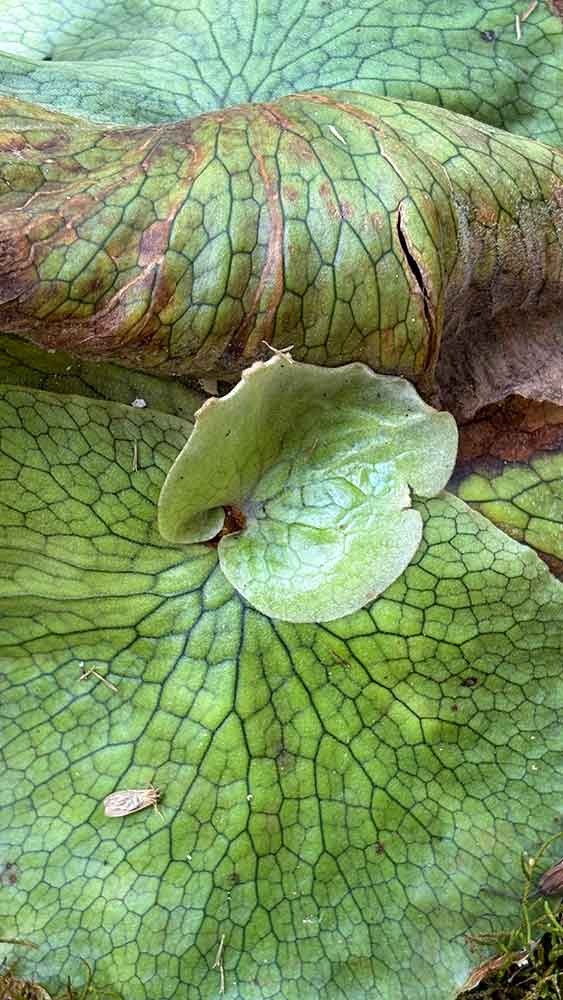
Platycerium superbum — shield
Staghorn fern
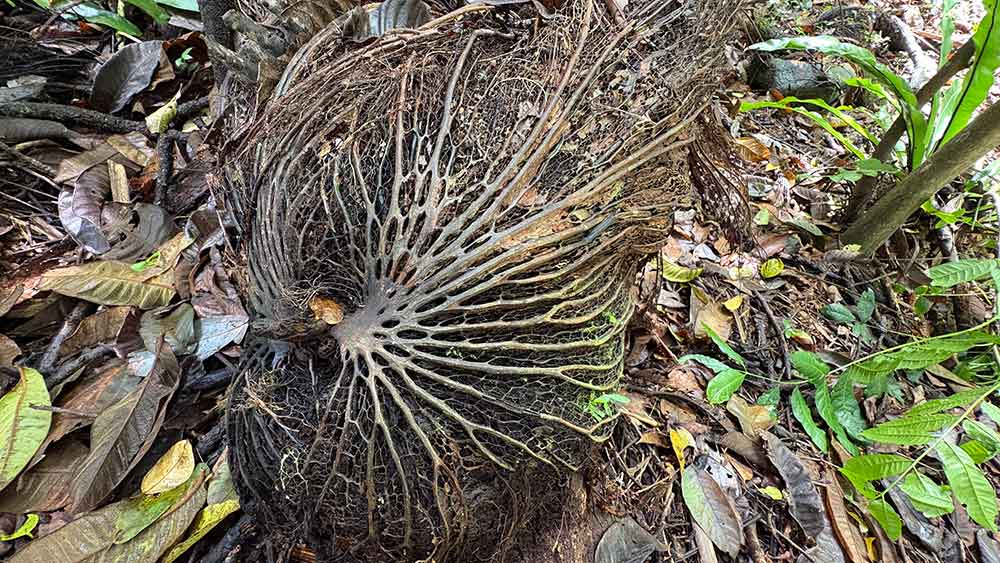
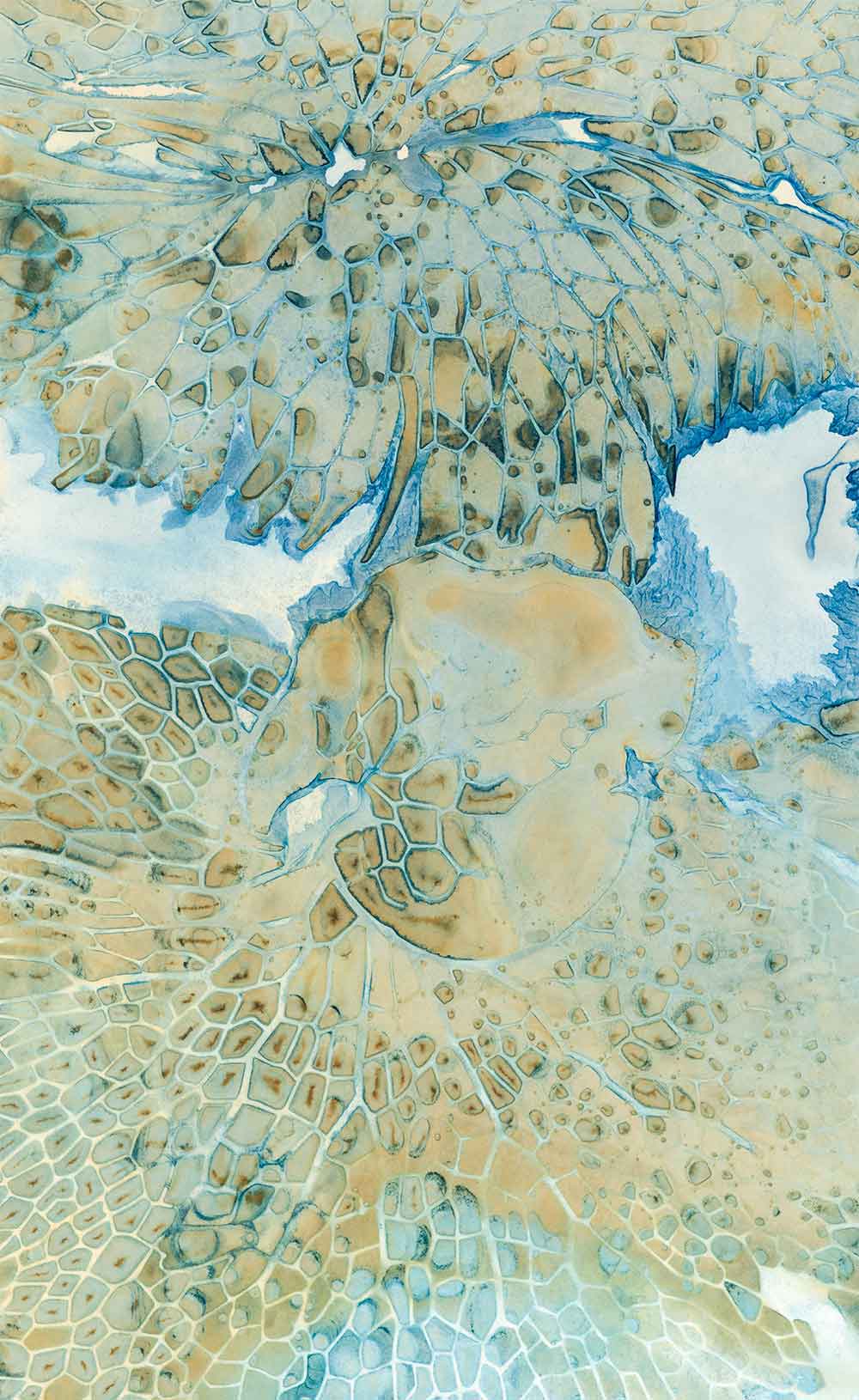
There is beauty in death.
The shield frond of a staghorn sits close against its host tree. As it ages from green to brown, it continues to protect the plant and gather falling organic matter.
I found a fallen, decaying staghorn whose shield had begun to break down. The softer material had disappeared, leaving empty pockets held within a network of veins.
It was skeletal, weathered and unexpectedly beautiful.
Decay revealed a structure I might never have noticed in the living plant. What appeared to be an ending was also part of an ongoing cycle, returning organic matter to the forest and supporting new life.
Platycerium superbum — frond
Staghorn fern
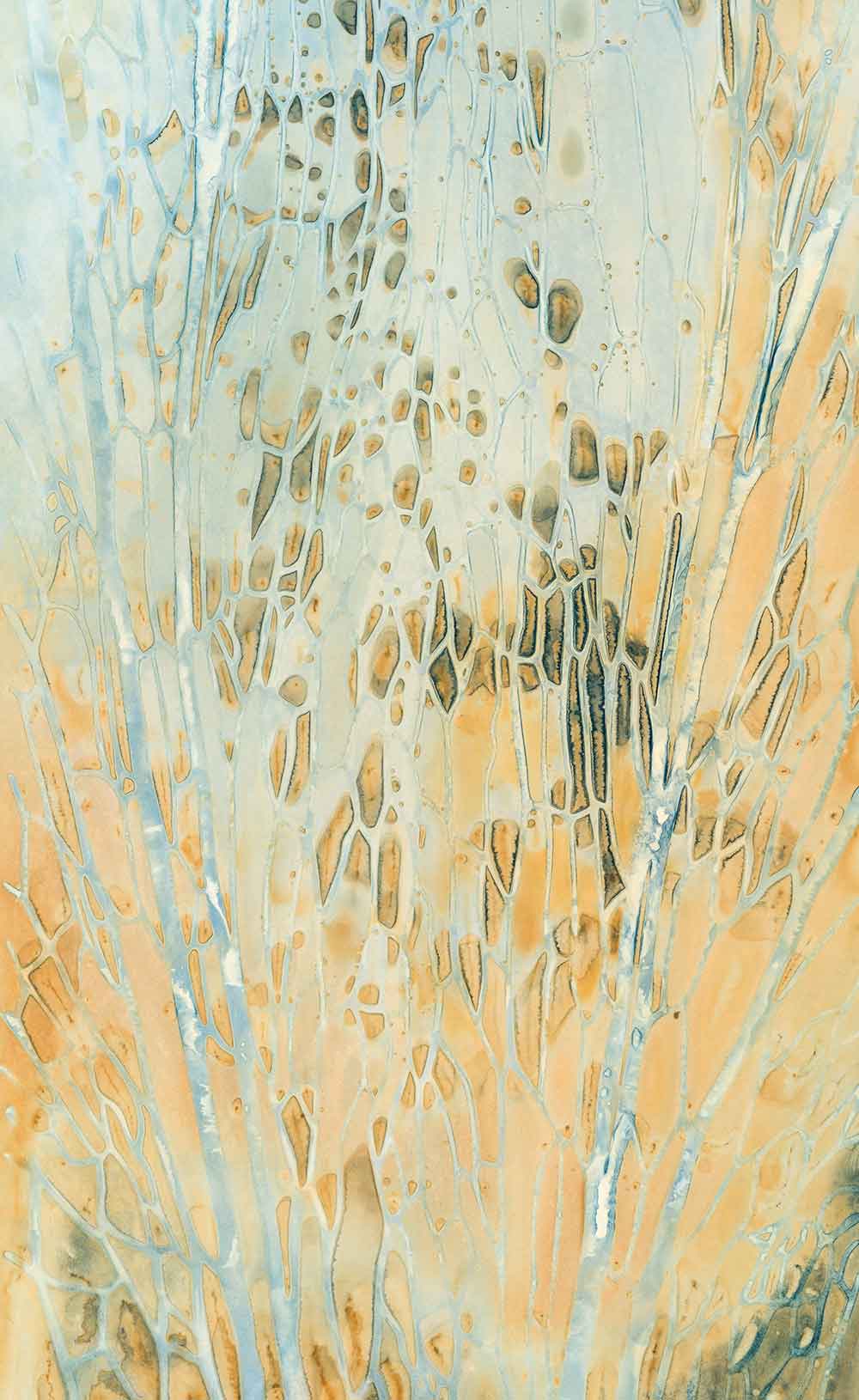
Detail becomes landscape.
A fallen staghorn frond allowed me to see a structure usually held high above me. Fallen, it gave me an opportunity to study the detail of its branching veins.
Removed from the rest of the plant and its familiar forest setting, the frond began to resemble an aerial landscape or map.
Paths divided and rejoined. Fine lines spread across the surface. A single fragment carried the feeling of something much larger.
Looking closely changed my sense of scale.
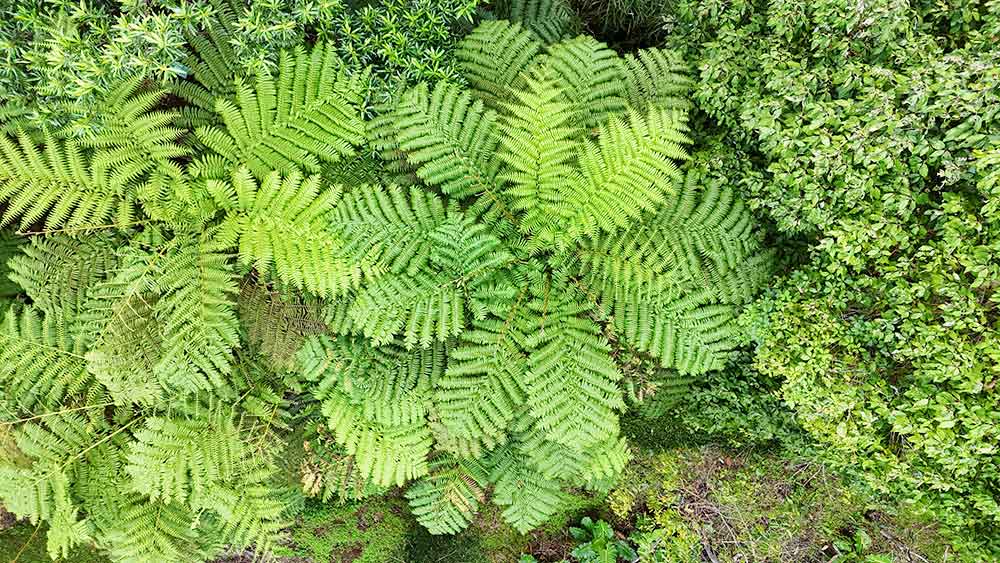
Cyathea cooperi
Tree fern
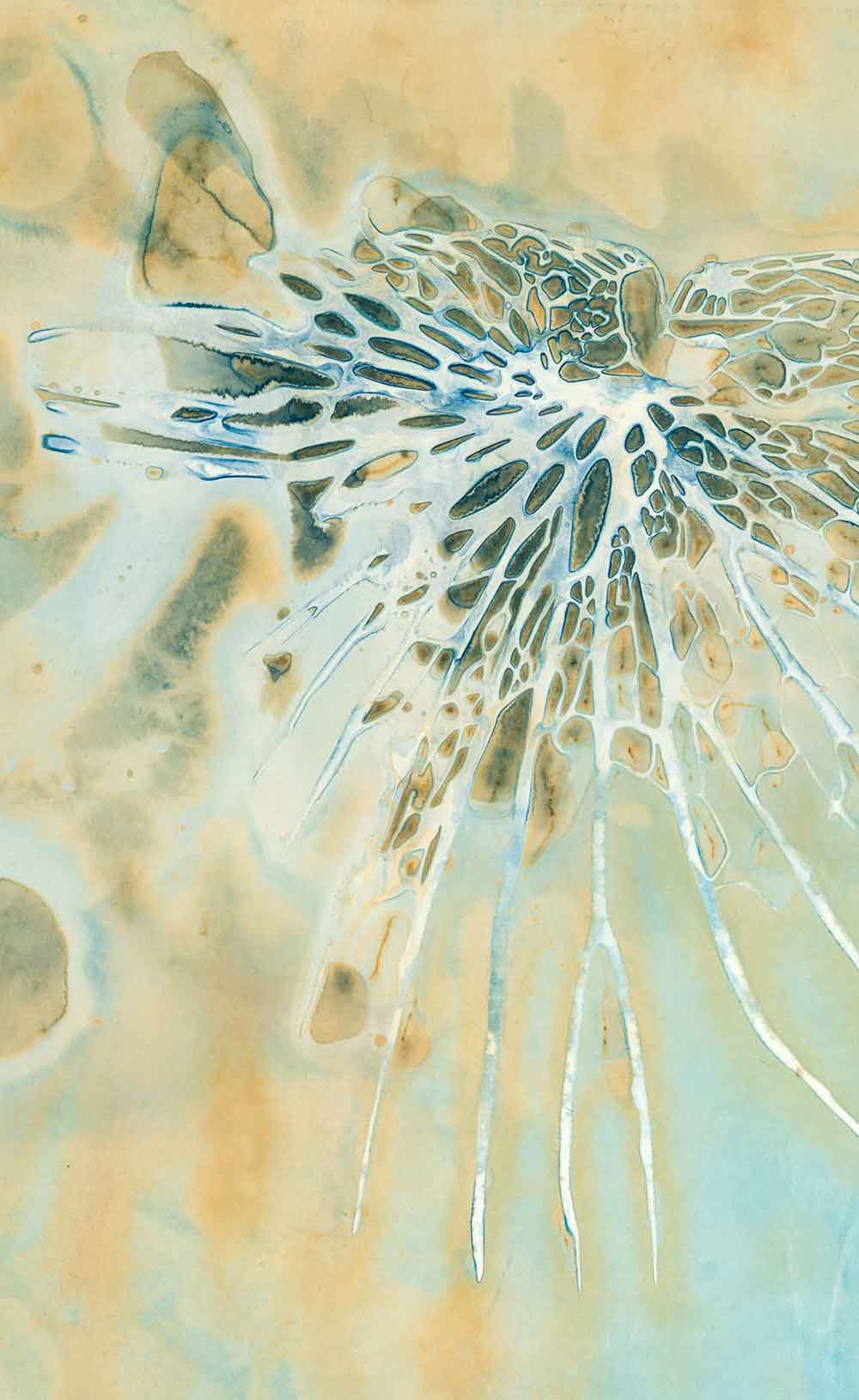
I had walked past many tree ferns. From below, they can feel immense. The fronds arch overhead and merge with the surrounding forest. Seen from above, or isolated from everything growing around it, the same plant becomes almost geometric.
Fronds radiate from a central point. Each carries smaller repetitions of a similar pattern, but the geometry is never rigid. Irregular edges, gaps and variations reveal the living growth within it.
The plant had always been there.
What changed was my viewpoint and the time I gave it.
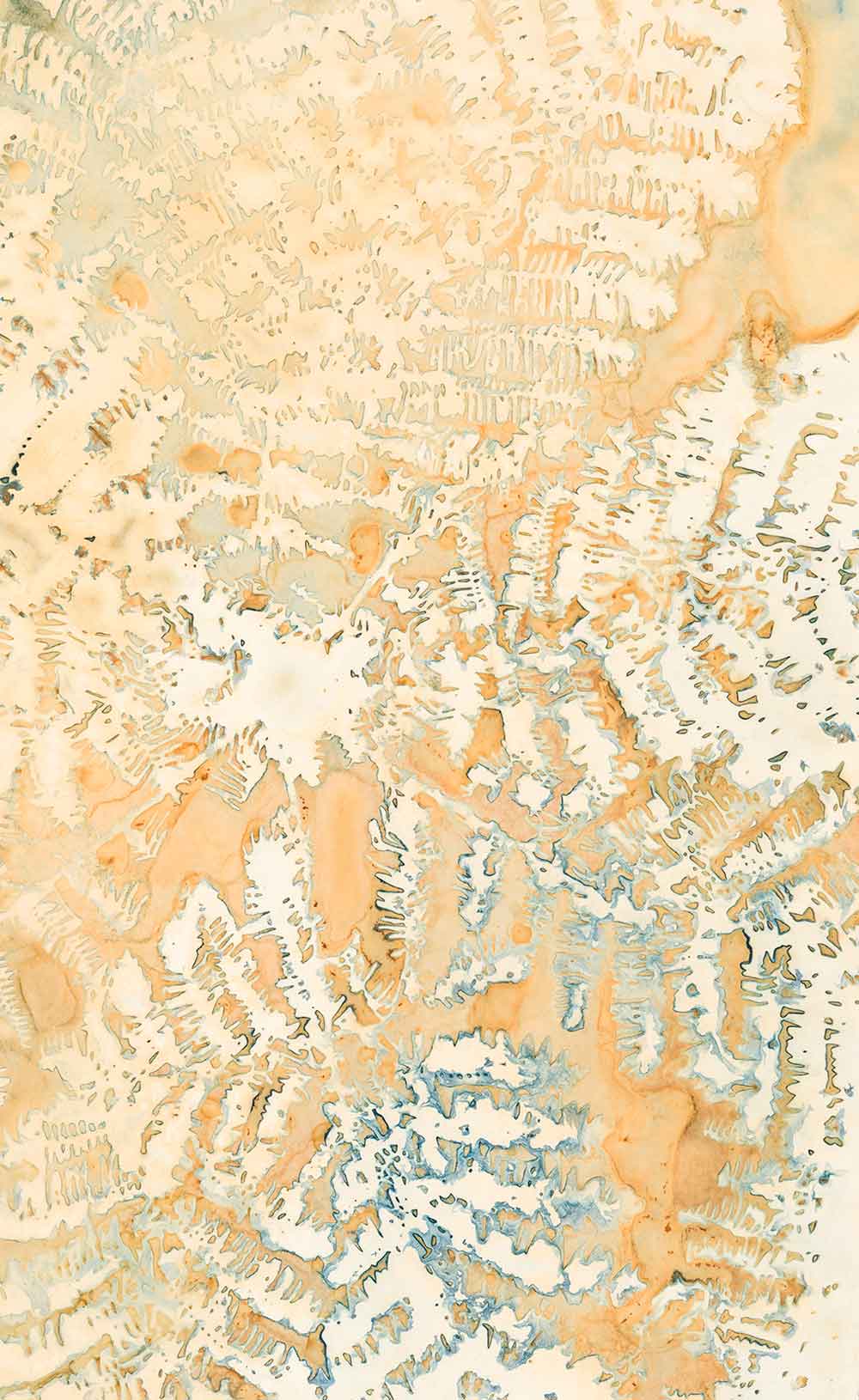
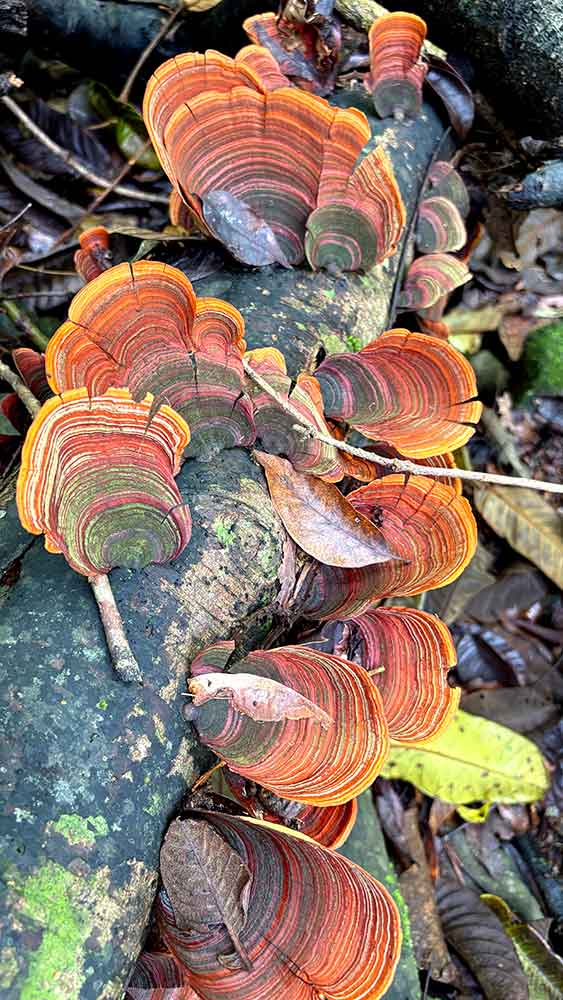
Stereum ostrea
Golden curtain crust fungi
The golden curtain crust fungi first caught my attention through colour and shape.
Small, layered fans spread across a fallen tree. Their fine bands and textures stood out against the surrounding vegetation.
Their beauty stopped me. Their role in the forest held me there.
These fungi help break down fallen timber and return nutrients to the soil. Their work supports the growth and renewal happening around them, much of it beyond our sight.
Something small and easily passed over was taking part in the larger life of the forest.
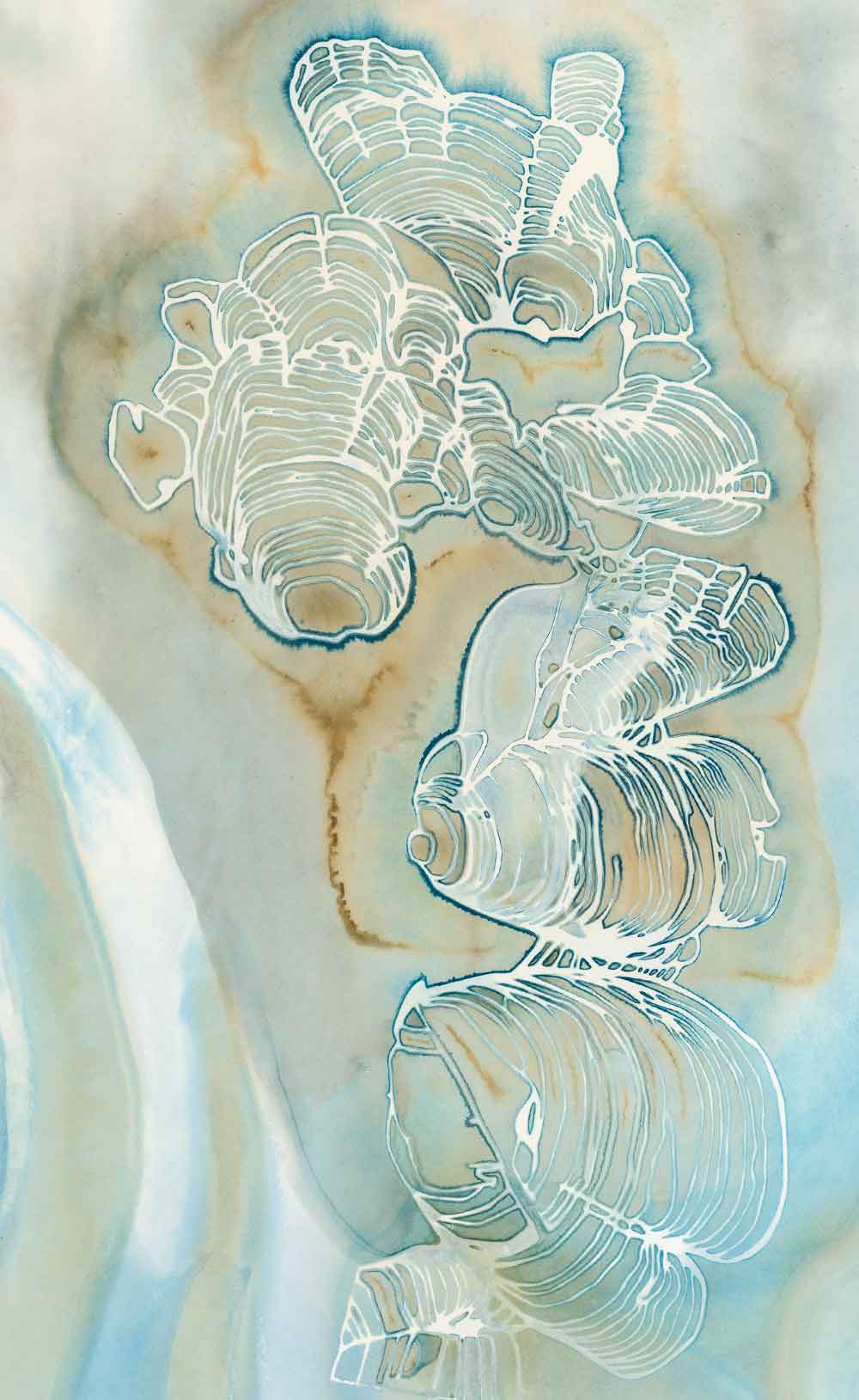
Photography as a way of looking
Photography underpins all my work, and this exhibition was no exception.
The photographs I took while walking the property were not just records of what I saw. They were records that allowed me to isolate details, return to them and look again.
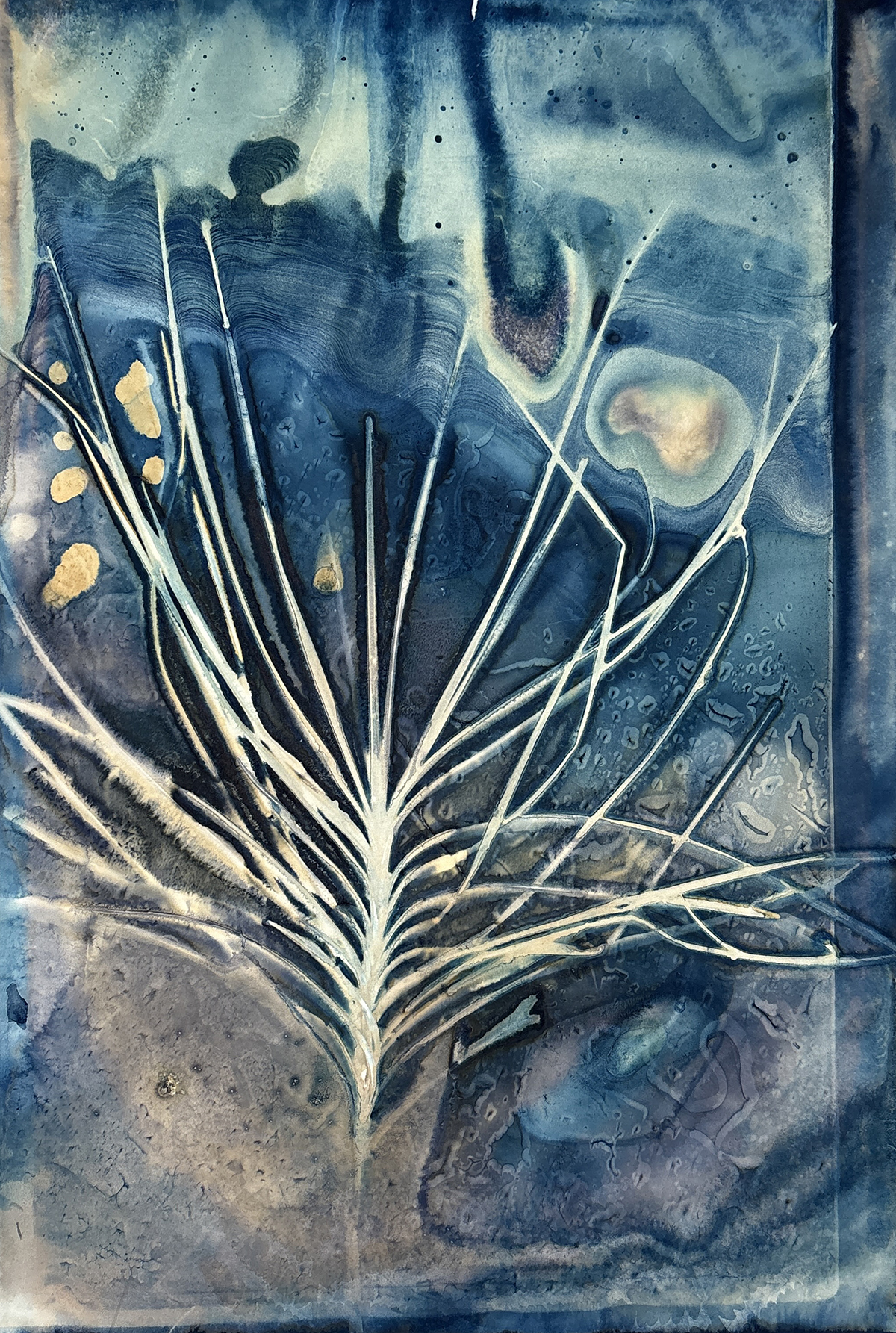
Each Close Attention artwork began with one of my photographs. I illustrated the selected images, isolating the essential details that drew my attention, then made stencils and used them within the wet cyanotype process.
These were the first works I made for Ghosts of Gondwana. They were also where cyanotype began to establish itself as the central process for the exhibition.
The connection felt right. Cyanotype is a photographic and printmaking process that relies on sunlight and water. The forest also depends upon sunlight and water to grow, regenerate and continue.

Isolating the view
The imagery in each of these works focuses entirely on its subject.
The finished papers are framed so they appear to float above the surface behind them. I love that sense of suspension. It reinforces the isolated view and gives each form its own space.
Without the visual complexity of the surrounding forest, branching veins can become river systems. A frond becomes a map. A canopy becomes a radial pattern. Decay becomes structure.
The familiar shifts just enough for us to see it again.
Attention as respect
For me, attention is a form of witnessing.
It acknowledges that something is here. It gives that life, structure or moment, our time.
When we stop and pay attention, we begin to notice more. We see vulnerability alongside strength, decay alongside renewal, and small lives taking part in much larger systems.
We may also begin to understand that what first appears ordinary is not ordinary at all.
Attention becomes a form of respect.
Close Attention is one of four groupings within Ghosts of Gondwana: In the Company of Trees. You can read an introduction to all four in Four ways of looking: inside Ghosts of Gondwana.
The exhibition continues at The Little Red Cottage art + ecology space, 20 Coral Street, Maleny, until Sunday 1 November.
I will also give an artist talk at the gallery on Saturday 24 October from 2–3pm.