
Four ways of looking: inside Ghosts of Gondwana
The exhibition has opened! Seeing the work displayed together for the first time was surreal.
For months, I had experienced the work in pieces. I stored finished pieces between sheets of paper and delivered them in batches for framing. I was so close to every part of it that it was difficult to see the exhibition as a whole.
There were definitely moments of anxiety. Had I made enough work? Would everything come together?
Somewhere beneath that uncertainty, I knew it would.
Then the work was on the walls. The artist books were open. The sound of birds and water moved through the gallery. For the first time, I could step back and see the exhibition in its completed form.
Ghosts of Gondwana: In the Company of Trees is now open at The Little Red Cottage art + ecology space in Maleny.
The work is presented across four groupings: Close Attention, Hidden Relationships, Living Traces and The Forest Unfolding.
Each group of work offers a different way of encountering the forest.
Over the next two weeks, I’ll share more about each one. For now, here is one work from each section and part of the story behind its making.
Close Attention
Awe begins with close attention.
Slowing down to notice structures often overlooked can lead to awe, revealing beauty, vulnerability and renewal.
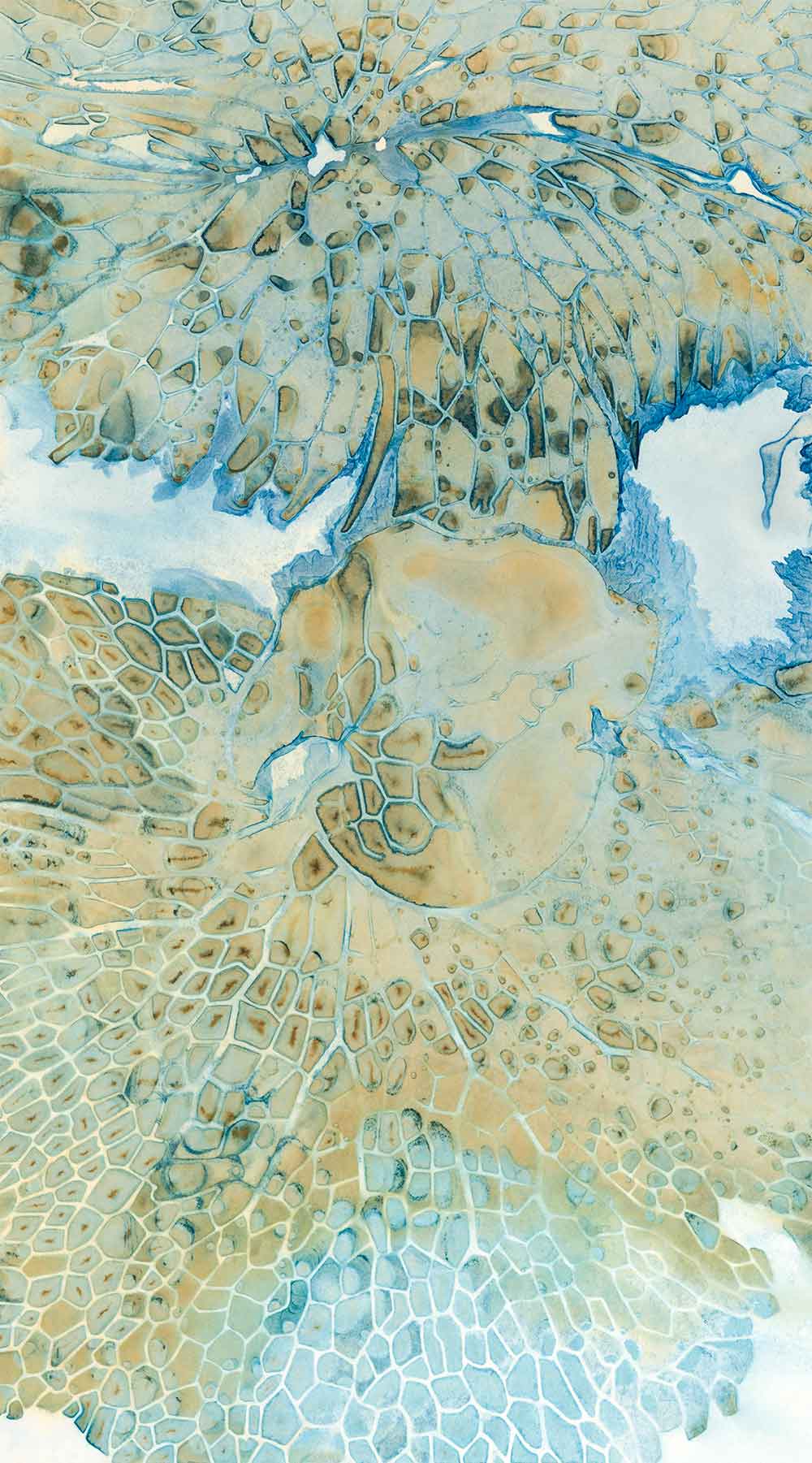
Platycerium superbum – pup
Staghorn fern
When I first noticed this tiny staghorn pup, it looked fresh and soft. It also appeared exposed and vulnerable, growing against the much larger tree. Yet within that small form was something resilient, strong and quietly determined.
I love to notice things.
My life is busy, often too busy (as it is for so many of us), but I still find myself drawn to small details. I think paying attention to what is around us matters. So much can be missed when we move too quickly.
The young staghorn became an expression of that idea. It asks us to notice new life emerging upon older life, and to recognise the strength held within something that initially appears fragile.
Sometimes the extraordinary is hiding in plain sight.
Hidden Relationship
A forest is not made by trees alone.
Hidden Relationships highlights the often unseen connections between plants, birds, and insects that allow life in the forest to continue.
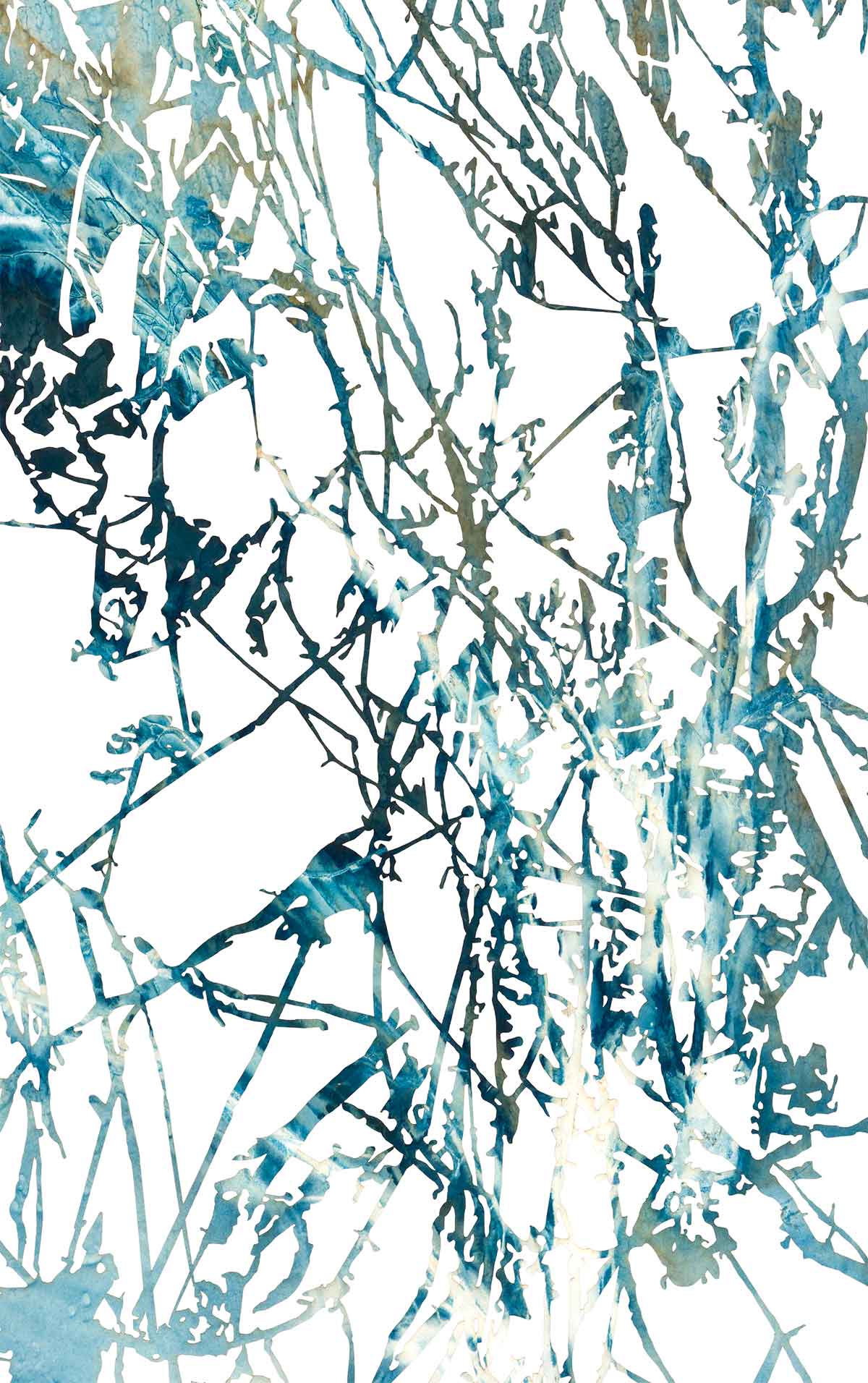
Pararistolochia praevenosa
Birdwing vine
On my first research visit to the property, I saw a female Richmond birdwing butterfly fly past a low flowering branch of a blue quandong.
Later, I found the birdwing vine growing elsewhere on the property. I did not see butterflies or caterpillars on the vine, but I knew how important the plant was to the butterfly’s life cycle.
I wanted to acknowledge a relationship I understood was present, even though I had not witnessed it there.
That idea became the starting point for the five works in Hidden Relationships. The plant forms appear as cyanotypes cut into paper. Behind them, birds and insects appear through blind embossing … present but not immediately visible.
The birdwing vine was the first work in the series. I photographed the plant, then created an illustration that could be cut from paper without losing the reaching, entangled character of the vine.
I was asking a sheet of paper to be strong enough to hold the structure.
Living Traces
The landscape is encountered through physical contact.
In Living Traces, plants become both subject and participant, leaving records of their physical contact with paper, sunlight and water.
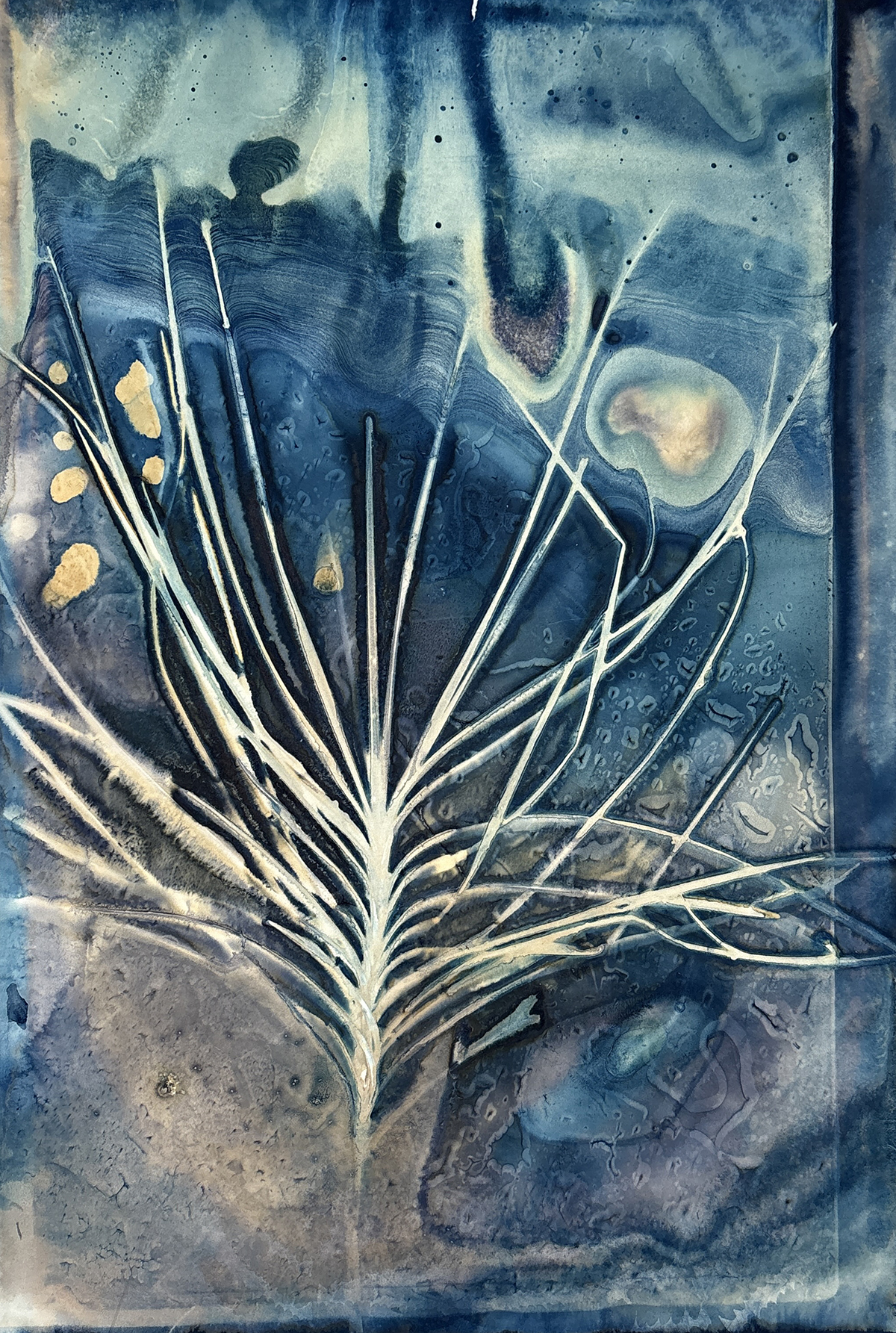
Freycinetia excelsa
Narrow-leaved climbing pandan
Finding this narrow-leaved climbing pandan was unexpected. I had not noticed it before.
Its long leaves seemed to dance across the forest floor. I wanted the finished work to retain that sense of movement rather than hold the plant too rigidly in place.
The plant material was laid directly onto cyanotype-coated paper and held beneath glass during exposure. Water helped secure the leaves, but it also moved around them, carrying the chemistry and softening the boundaries of the image.
Drops of water caught on the glass left their own marks. To me, they suggest rain falling through the rainforest where the plant was growing.
I love that the plant used to make this work was picked for me by the property owner. His hand became another quiet part of the process and of the connection between the artwork and the place from which it came.
The Forest Unfolding
A book asks us to slow down.
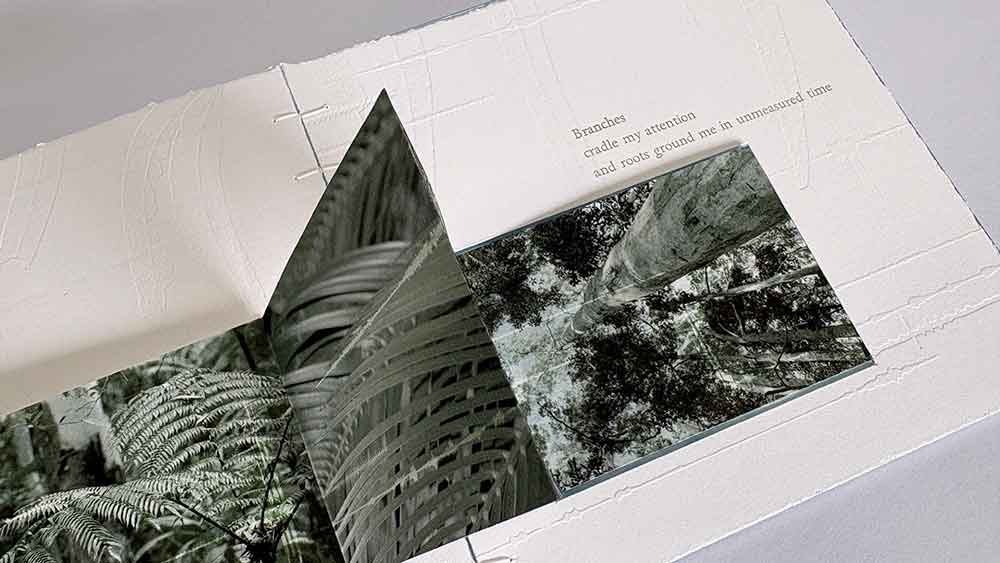
The Forest Unfolding brings together artist books that invite a slower way of looking, letting meaning gather through words, images, layers and time.
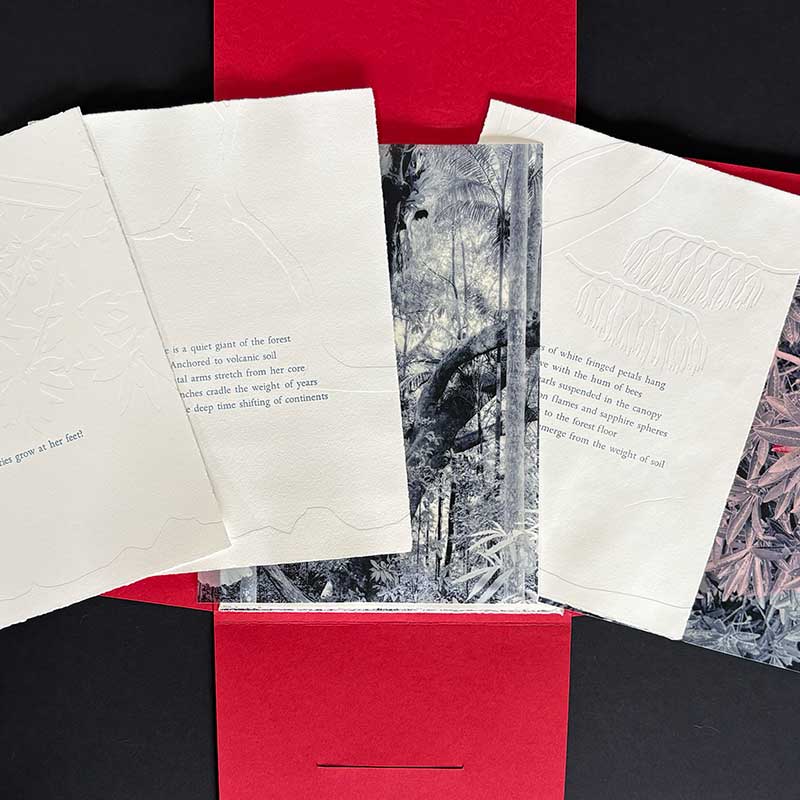
What stories grow at her feet?
My first view of the blue quandong was from a high track.
I was looking into her canopy while still standing beneath it. Her trunk was immense. Heavy lower branches reached outwards, while other branches rose vertically from them towards the light.
She felt like a giant.
Over repeated visits, I began to see more: the density of the canopy, flowers and fruit, the reach of her branches and her position within the surrounding forest.
The artist book allowed me to tell more of this story than I could hold within one framed work. The story does not reveal itself all at once. It grows through looking, turning, returning and finding something that may have been missed before.
Much like coming to know the tree herself.
More from the exhibition
Over the next two weeks, I will take you more deeply into each section of the exhibition and share the ideas, processes and individual works within it.
Links will be added here as each post is published:
- Close Attention
- Hidden Relationships
- Living Traces
- The Forest Unfolding: Artist Books
You can also read the earlier post about how Ghosts of Gondwana began.
Ghosts of Gondwana: In the Company of Trees continues at The Little Red Cottage art + ecology space until Sunday 1 November.
I will be at the exhibition whenever it is open, and I will give an artist talk on Saturday 24 October from 2–3pm.
Come and spend some time in the company of trees.