
Hidden Relationships: a forest is not made by trees alone


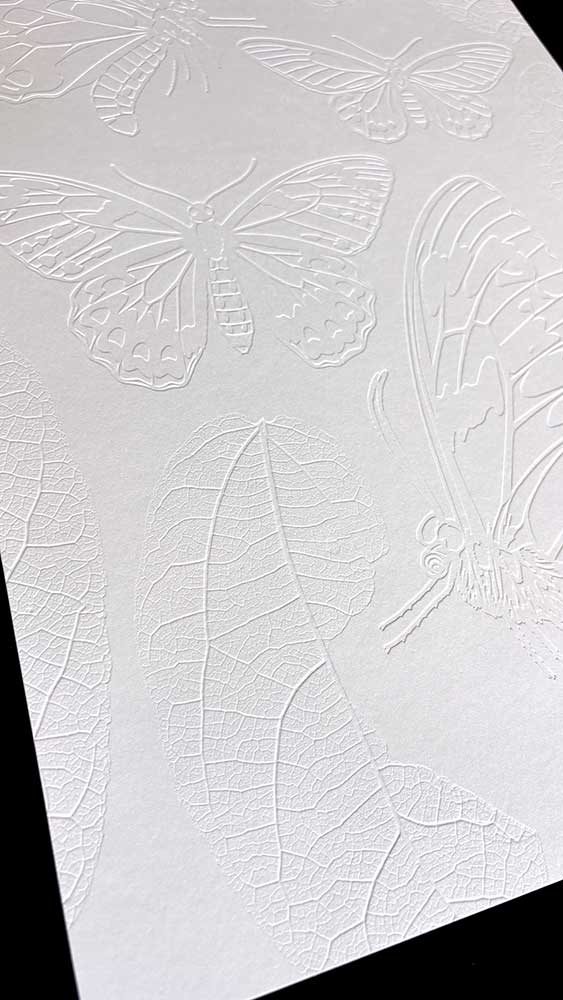
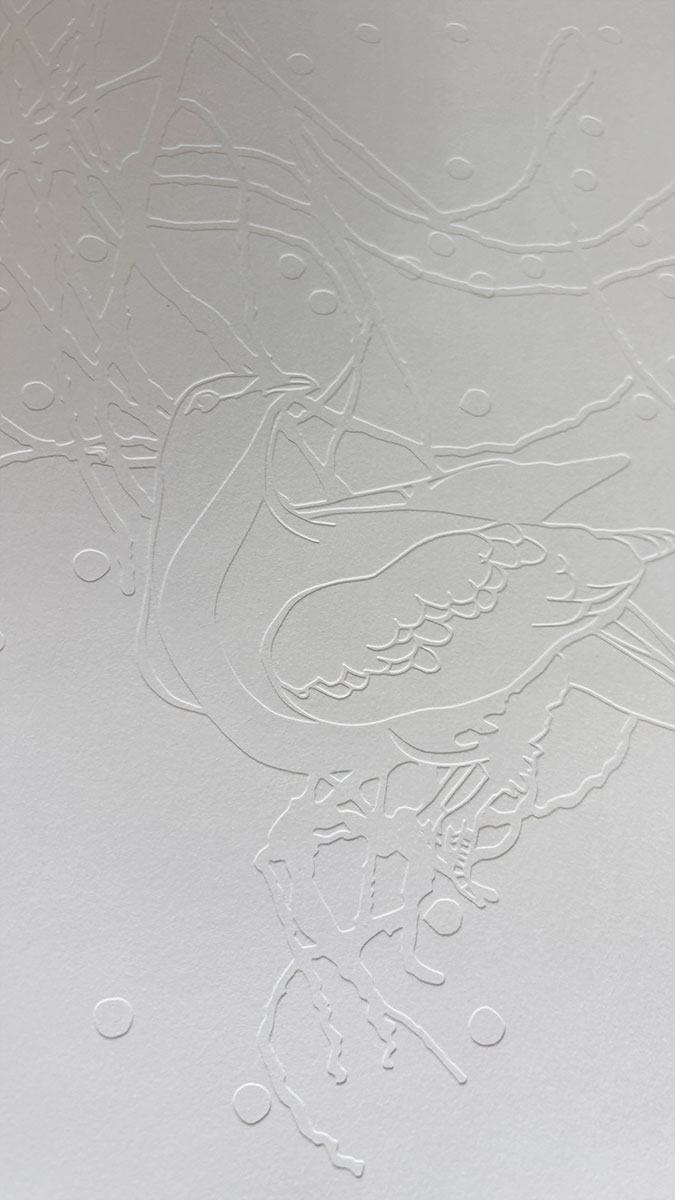
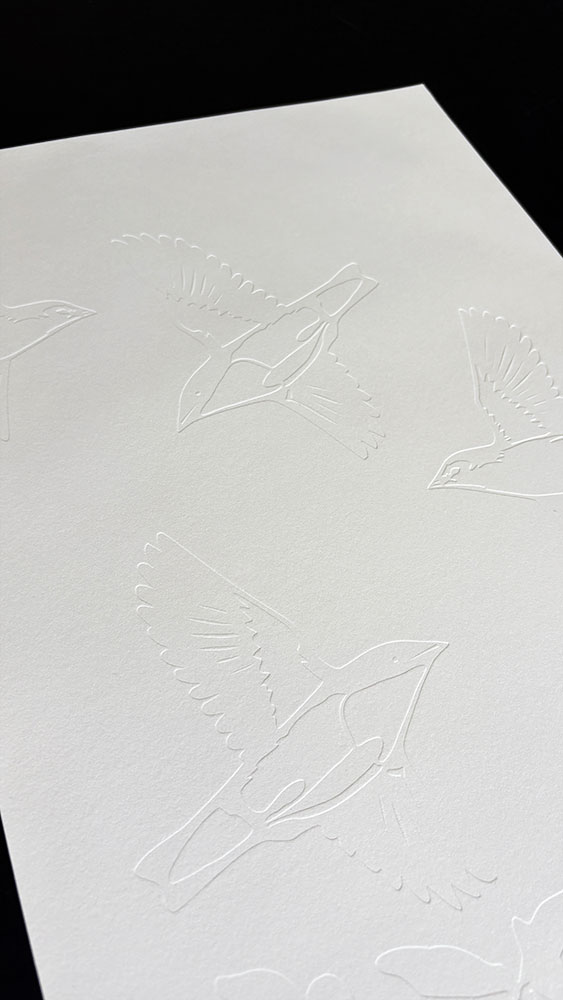
At first, the embossings can be easy to miss.
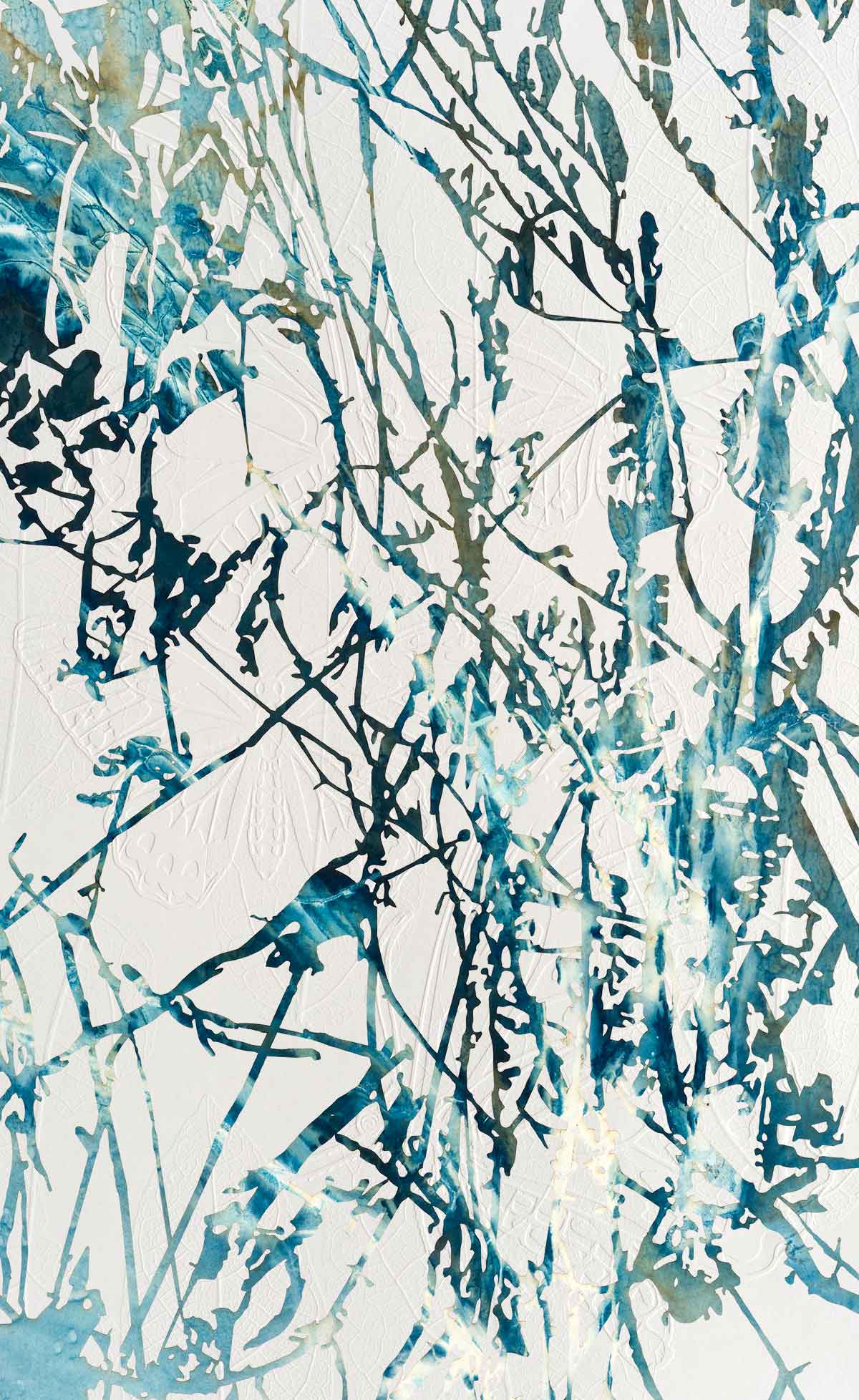
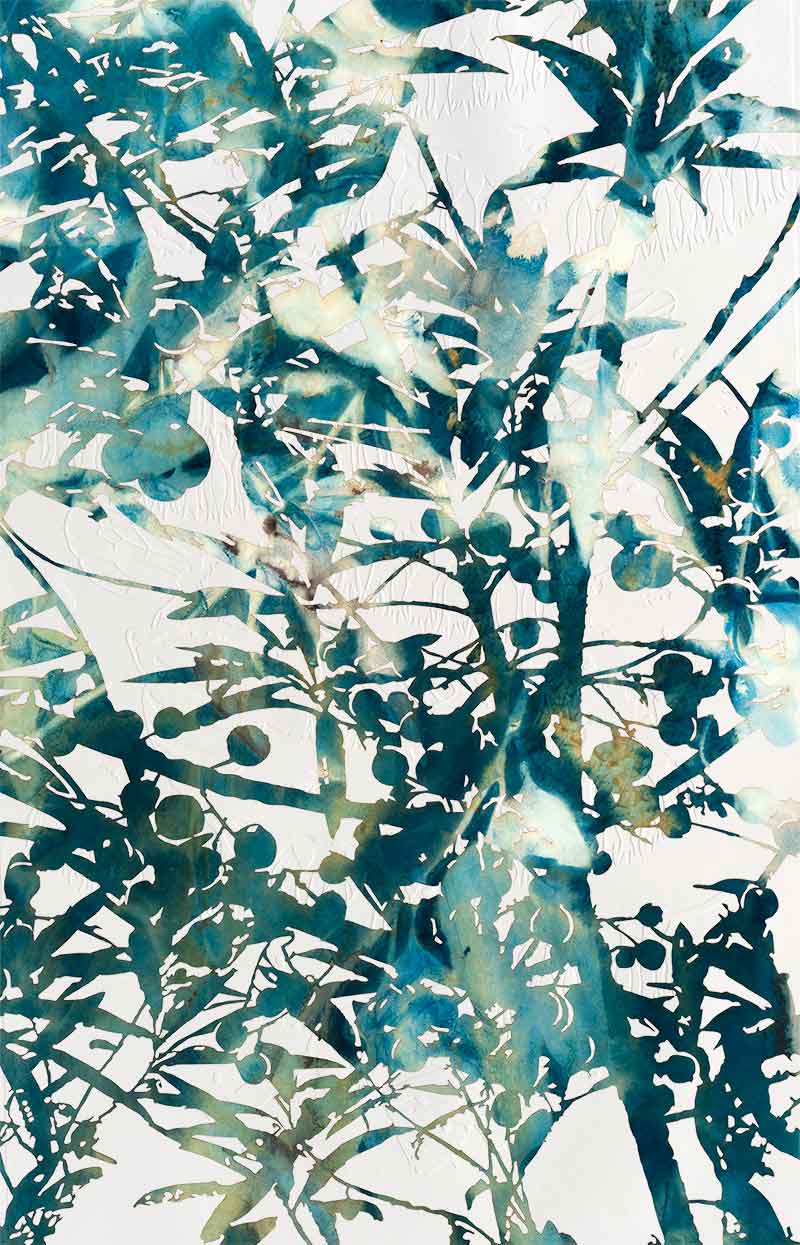
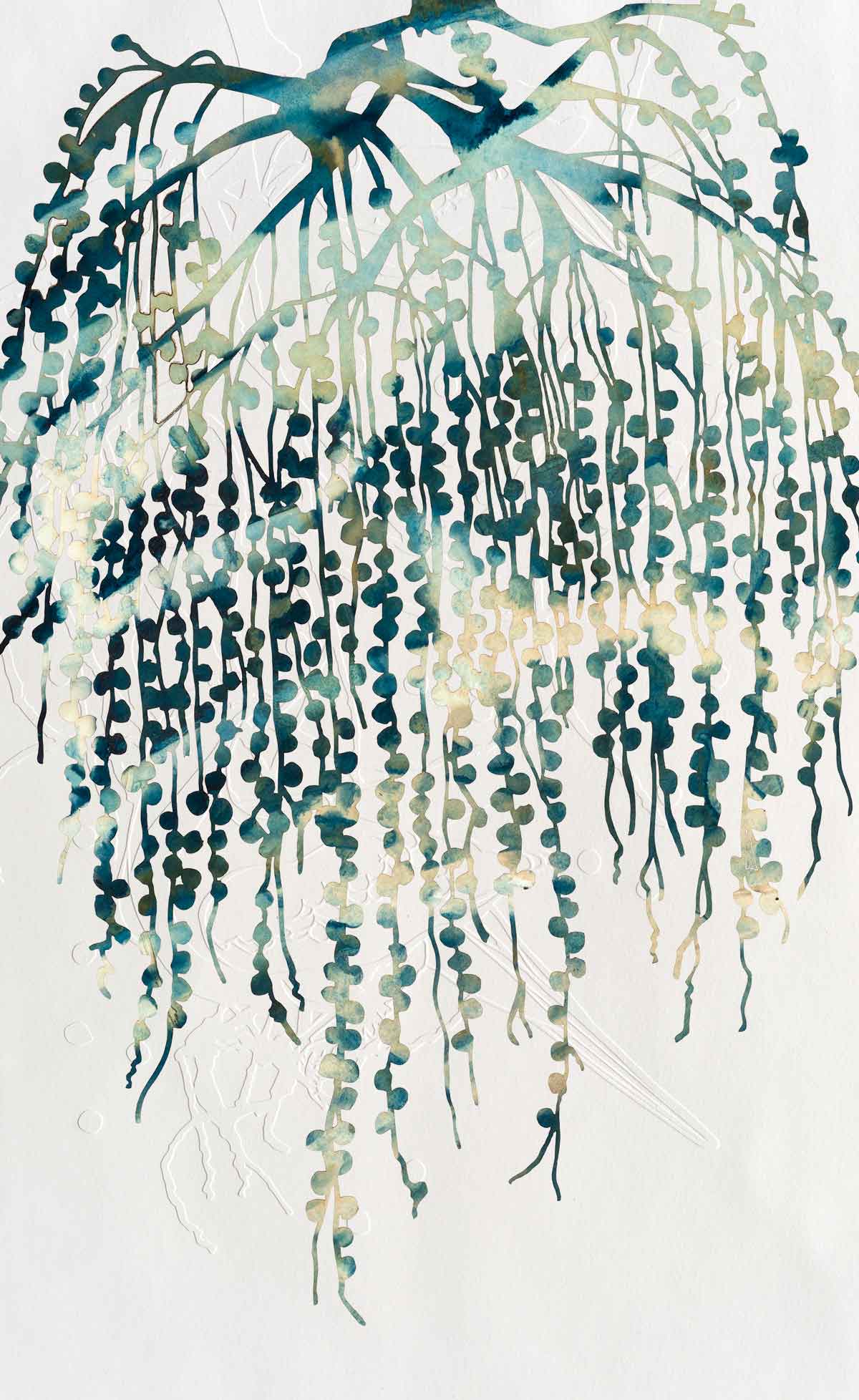
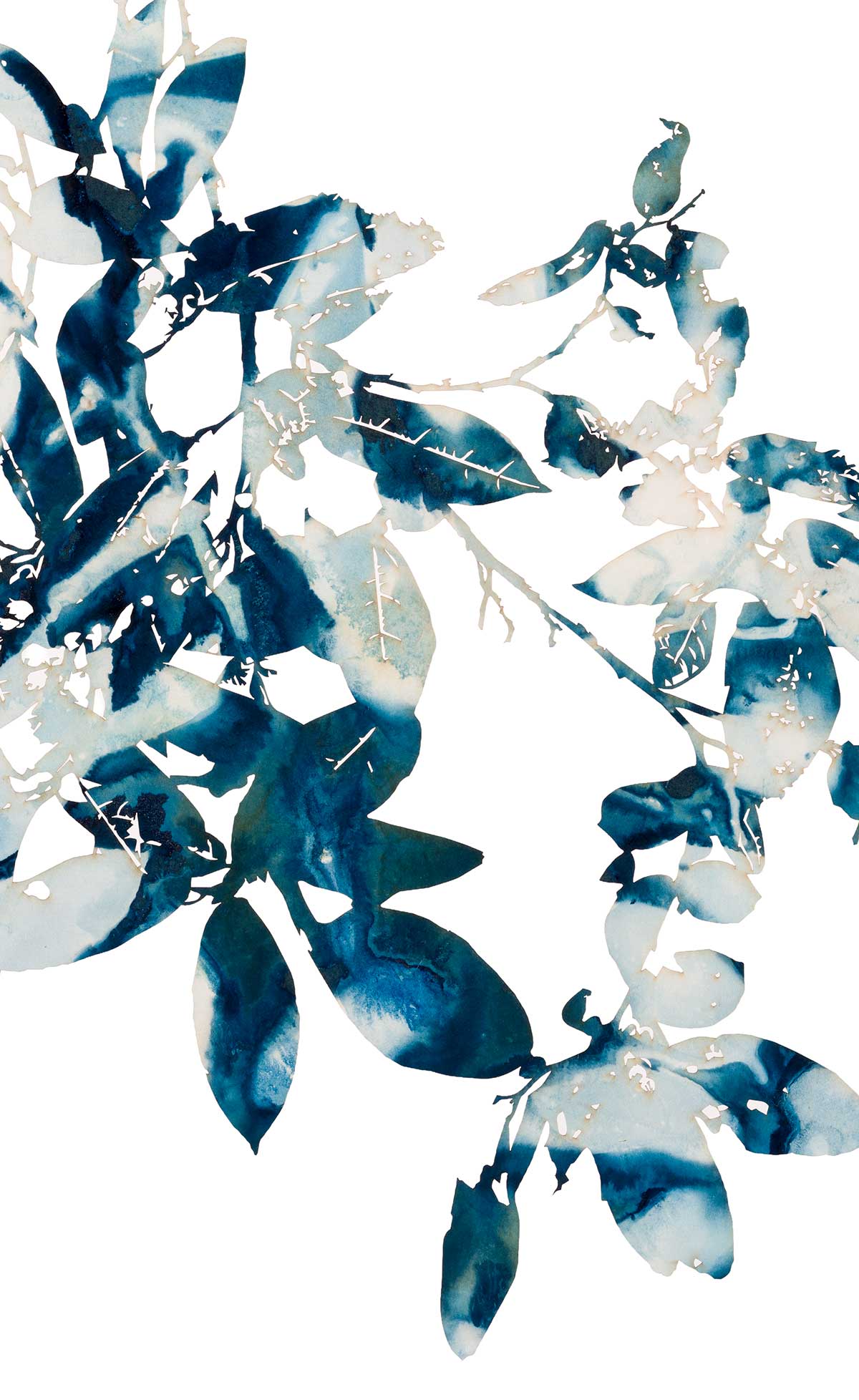
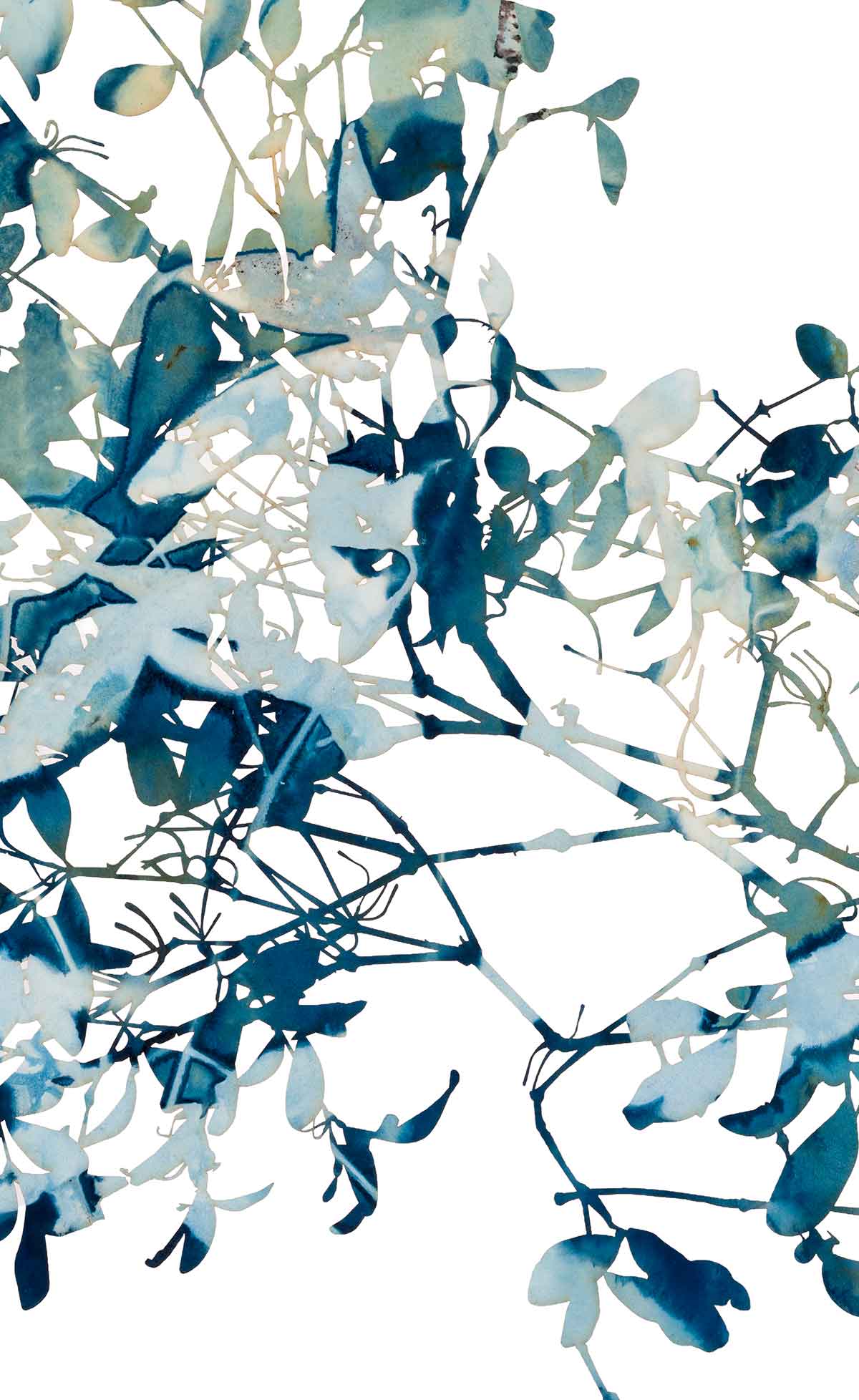
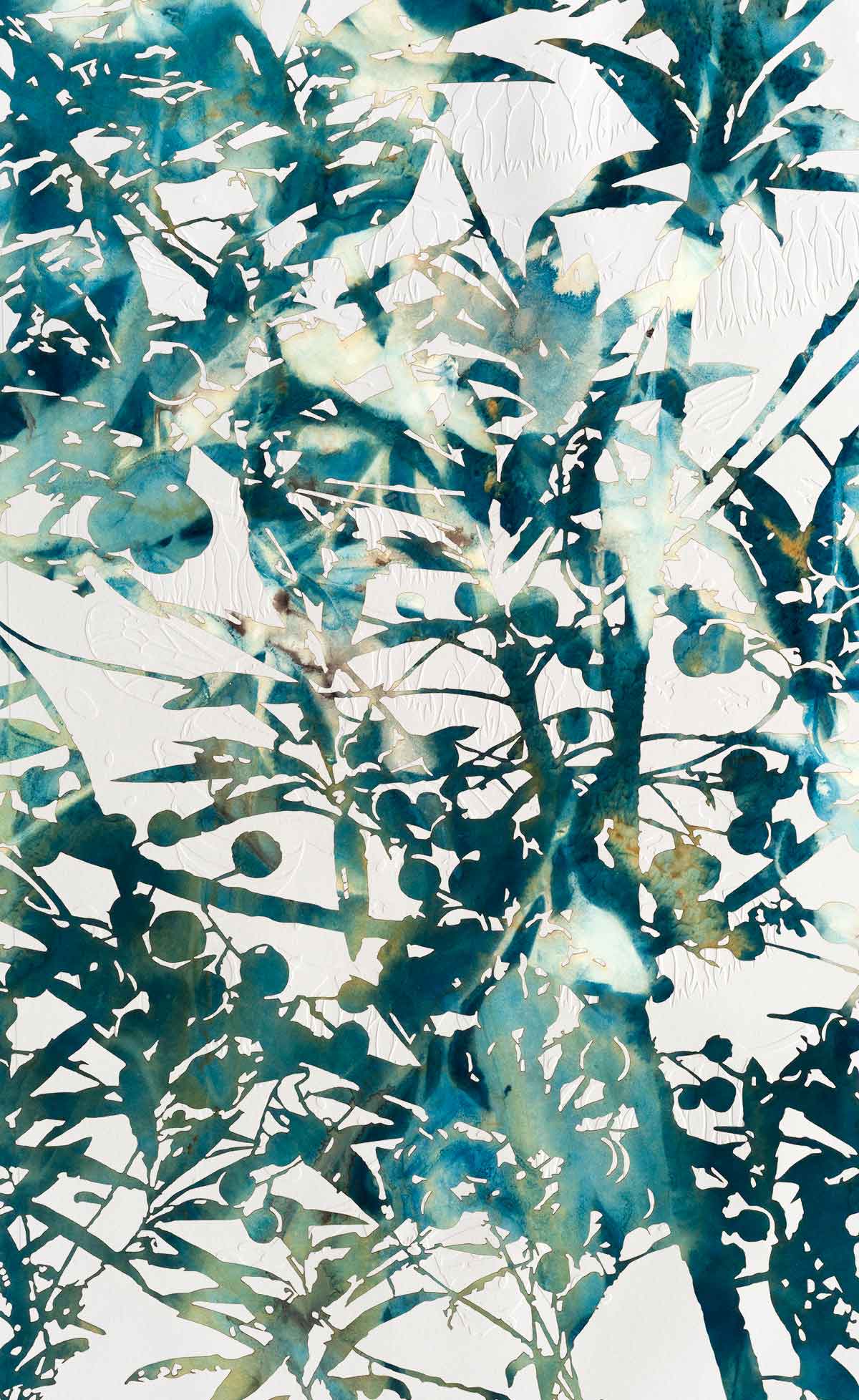
The cyanotype plant form is what you see first. Move closer and the light begins to catch subtle rises and hollows in the white paper behind it. A butterfly appears. A bird. A cluster of flowers. A tiny entrance into the hidden interior of a fig.
That gradual reveal is intentional.
Many of the relationships that sustain a forest unfold beyond ordinary human observation. The birds and insects may be high in the canopy, too small to see or simply present when we are not looking.
The closer you move towards these works, the more they reveal.
A forest is not made by trees alone.
Finding a visual language
I knew I wanted to make work about the interconnected nature of life within the forest. What I did not know was how to show relationships that I understood were present but had not seen for myself.
The idea began with the Richmond birdwing vine.
I was drawing the vine from my photographs, creating an illustration for a new stencil, when I realised its branching form could become a cut layer placed above an image of the butterfly.
I had briefly seen a female Richmond birdwing on the first day of my research visits. She flew past a low flowering branch of a blue quandong. I did not see butterflies or caterpillars on the large birdwing vine I later found, but I knew how important the vine was to the butterfly’s life cycle.
I wanted the butterfly to be present in the artwork while retaining that sense of being unseen.
Blind embossing felt like the obvious choice.
I love its subtlety and the reward that comes when light reveals its detail. It felt similar to the reward of sighting a butterfly or bird within the forest: something present suddenly becoming visible.
Once the birdwing work came together, the visual language for the remaining four works followed.


Layers of presence
Each plant form began with photographs I took on the property. I made an illustration from those photographs, then laser-cut the shape from a wet cyanotype created with plant material connected to the subject.
The birds, insects and other details were blind-embossed from stencils developed through my photographs, illustrations and research.
Blind embossing presses an image into paper without ink. Its details become visible through highlight and shadow.
The cut cyanotype floats above the embossed paper. The physical space between the layers creates depth, while shadows cast by the plant form draw attention towards the quieter image behind it.
Light is essential.
From across the room, a visitor may see only the cyanotype. The embossed details begin to appear when they move within a few feet of the work and change their viewing angle.
I have watched visitors notice the first hidden image, then move towards each of the other works to look for more. Their surprise becomes part of the experience.
All the plants represented in this series grow on the property. The birds and insects are also present there and were identified by the property owners.
Research helped me understand the relationships I could not observe directly.
Five Hidden Relationships
Pararistolochia praevenosa
Birdwing vine and Richmond birdwing butterfly
The birdwing vine I found was immense.
Its large leaves climbed high into the canopy of several trees. I had never seen a vine of that scale.
Richmond birdwing butterflies lay their eggs on this plant, and its leaves feed their caterpillars. The future of the butterfly begins with the vine.
Behind the cut cyanotype, embossed Richmond birdwing butterflies and vine-leaf skeletons give form to this relationship.
I did not witness the butterfly using this particular vine, but its possibility was held within the leaves.
Archontophoenix cunninghamiana
Piccabeen palm and wompoo fruit-dove
On one visit, I heard a bird feeding on the fruit of a piccabeen palm.
When I looked up, I caught only a flash of colour as it flew away. It may have been a Wompoo fruit-dove or an emerald dove. I cannot be certain.
That fleeting encounter was enough to draw my attention to the palm’s relationship with fruit-eating birds.
Piccabeen palms wear their red fruit like jewelled crowns. Birds feed upon it and carry the seeds away from the parent palm, giving new growth the chance to begin elsewhere.
The embossed Wompoo fruit-doves represent a species known to live on the property. Behind the cyanotype inflorescence, the birds make visible the movement of fruit, seed and future palms through the forest.
Elaeocarpus grandis
Blue quandong and native bees
Standing beneath a giant blue quandong, I heard its canopy humming with bees.
The sound was loud and beautiful. I could not see the insects among the height and density of the leaves, but the strength of the hum made me imagine swarms moving between the flowers.
That sound became one of my strongest memories of the property.
Blue-banded bees and native stingless bees are present there, so they became the unseen lives embossed behind the fruiting blue quandong.
Their small movements carry pollen between flowers, helping produce fruit and seed. What I heard above me belonged to the continuing life of the forest.
Benthamina alyxifolia
Mistletoe and Mistletoebird
Mistletoe can be visually elusive.
It grows high in the canopy of tall trees, merging with the surrounding foliage. The more I looked, the more of it I began to see.
Mistletoe draws water and nutrients from its host. It is a parasitic relationship, but that is only one part of a larger set of connections.
The Mistletoebird feeds on its fruit. The seeds pass quickly through the bird’s body and retain a sticky coating that helps them attach to branches, where new plants may grow.
In this work, the mistletoe form is cut from a cyanotype made with eucalyptus leaves, bringing host and parasite together. Embossed mistletoe leaves and birds sit behind it.
The tree supports the mistletoe. The mistletoe feeds the bird. The bird carries its seeds onward.
Ficus coronata
Sandpaper fig and fig wasp
The sandpaper fig introduced me to a relationship I had not known about.
What appears to be a fig fruit is an enclosed structure containing tiny flowers. A pollinating fig wasp, only one or two millimetres long, enters through a small opening called the ostiole.
I did not see the wasp. Its life unfolds almost entirely beyond our sight, much of it within the hidden chamber of the fig.
The fig shelters the wasp’s developing young, while the wasp carries pollen between figs. The resulting fruit feeds other animals, which carry the seeds onwards.
I was fascinated by the complexity held within something so small—and by the textured leaves of the sandpaper fig itself.
Behind the cut cyanotype tree, embossed leaves and the ostiole draw attention to this easily overlooked entrance.
Existing in relationship
These works do not tell five separate stories.
Together, they show a forest formed through connection: plants feeding insects, trees sheltering plants, birds carrying seeds and tiny lives moving pollen between flowers.
Some relationships are cooperative. Some are unequal. Many extend into other relationships beyond those represented here.
The whole forest exists this way.
It is an interconnected community of plants, animals, fungi and countless other lives. We are not separate from that network. We also exist within and depend upon relationships.
To belong within a forest is to exist in relationship.
Hidden Relationships is one of four groupings within Ghosts of Gondwana: In the Company of Trees. You can read an introduction to the complete exhibition in Four ways of looking: inside Ghosts of Gondwana.
You can also read about the first grouping in Close Attention: where awe begins.